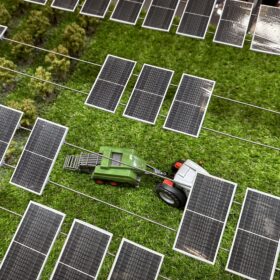
Survey finds 85.8% of Canadians support agrivoltaics
Canadian researchers conducted the first nationwide survey on public attitudes toward agrivoltaics, finding strong support across provinces with 85.8% of respondents in favor, although preferences varied by configuration. Opposition mainly stemmed from resistance to change, aesthetic concerns, and lack of awareness, highlighting the need for public education and updated policy frameworks to enable wider adoption.
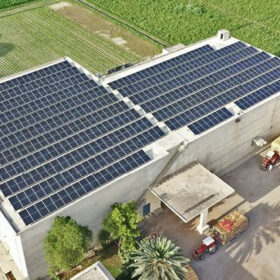
Pakistan blocks retroactive export rate cut in net billing shift
Late amendment put forward to halt sudden retroactive change to export rates for net metering contract holders in Pakistan. It follows strong criticism from local solar industry leaders over sudden change in export rates under new net billing structure.
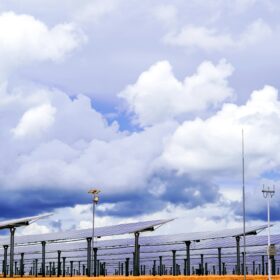
Italy’s new energy provisions could boost gas use, undermine renewables and storage competitiveness
Italy’s new energy decree aims to cut consumer electricity bills, but industry experts warn it could slash solar revenues by over 30%, slow the PPA and battery storage markets, and increase gas-fired generation. The measure also raises regulatory and state aid concerns, potentially making the Italian electricity market riskier for investors.

Solar electricity during night-time
Night-time in solar PV systems averages 16 hours, requiring significant storage or alternative generation to meet demand. Pumped hydro and batteries are key, with pumped hydro offering long-duration, low-cost storage for cloudy or windless periods. Complementary strategies include wind power, load shifting, and dispatchable generation, while high solar and wind penetration reshapes grid operations and pricing.

U.S government sets preliminary countervailing duties on solar imports from India, Indonesia and Laos
The U.S. Department of Commerce has issued preliminary findings that solar manufacturers in India, Indonesia and Laos benefited from government subsidies, paving the way for countervailing duties of up to 143.30%.
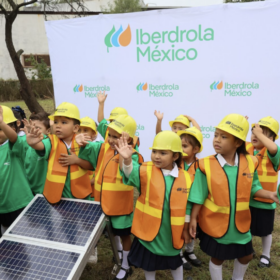
Mexico mandates social impact reviews for BESS projects
New rules from Mexico’s Secretaría de Energía require battery energy storage systems (BESS) to submit social impact assessments for the first time, with stricter obligations above 250 MWh.
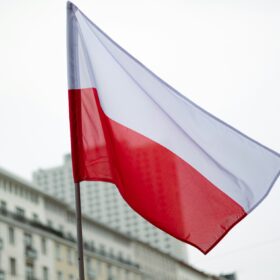
Poland adds 3.6 GW of solar in 2025
Poland’s cumulative solar capacity reached 24.8 GW by the end of 2025, with last year’s growth led by C&I and large-scale installations.
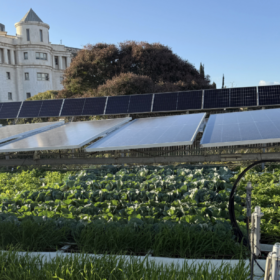
Israel approves rules for agrivoltaics
A zoning masterplan for agrivoltaics in Israel specifies solar panel coverage must not exceed 30% of the cultivated area. The lower edge of panels must be at least 1.5 m above the ground for field crops, increasing to 4.5 meters for orchards and other crops.

ACWA Power to build 2 GW of solar in Türkiye
Saudi Arabian energy giant ACWA Power will build two 1 GW solar power plants in Türkiye as part of a wider investment agreement covering 5 GW of new renewables capacity in the country.

South Africa’s solar industry must ‘focus on execution’
With South Africa’s solar industry moving toward a phase of market-led growth, Sim Khuluse, from the South African Photovoltaic Industry Association (SAPVIA), says the challenge for the forthcoming year is moving ahead with grid modernization and expansion.
