Türkiye publishes rules for floating solar
Türkiye has published a regulatory framework covering the legal basis for developing floating solar plants on reservoirs and dams. The rules establish where floating solar can and cannot be built and how projects can be approved.
Small islands, big impact: the role of solar PV for the tropics
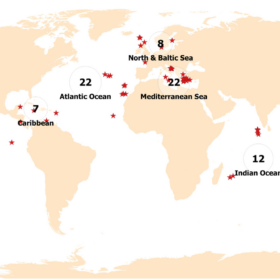
Low-cost renewables provide an opportunity for tropical islands to drive a sustainable, secure and self-sufficient economy. Solar PV emerges as the bulk energy provider, driven by excellent resource conditions and fast-improving economic attractiveness. The anticipated momentum of solar PV in tropical islands can best be characterised as a Solar-to-X Economy.
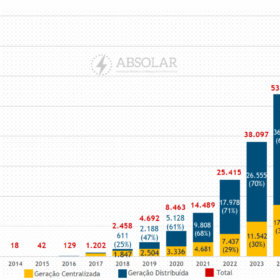
Brazil to add 11.4 GW of solar in 2025 despite regulatory hurdles
Brazilian photovoltaic association ABSolar says solar capacity additions may fall 24% to 10.6 GW in 2026 from 15 GW in 2024, with regulatory barriers, high capital costs, and restricted self‑generation access slowing investment and reducing jobs.

Bangladesh reinstates 11 solar plants totaling 918 MW after tariff cuts
Bangladesh reinstated approvals for 11 solar plants with a combined capacity of 918 MW after developers agreed to lower tariffs, in a move expected to save the government BDT 11.69 billion ($96.2 million) per year.
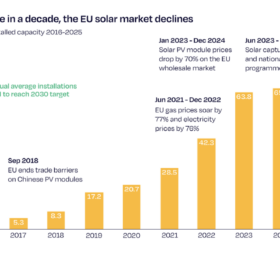
EU installs 65.1 GW of solar in 2025
The European Union’s solar fleet has reached 406 GW, surpassing the EU Solar Strategy’s 400 GW goal for 2025, but SolarPower Europe says the sector’s first contraction in a decade is putting the bloc’s 750 GW target for 2030 at risk.
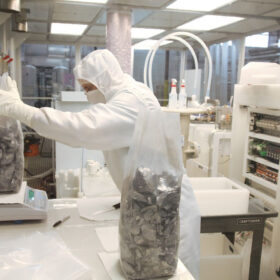
Beijing group creates official entity to guide China’s polysilicon capacity
Industry analysts say a new Beijing-based coordination platform created by China’s top polysilicon producers signals a turn toward managed capacity, as the sector tries to halt a steep price slide and mounting consolidation pressures.
GCL Technology forms $287 million entity to buy stake in Chinese rival
GCL Technology Holdings has set up a CNY 2.06 billion ($287 million) partnership to acquire a 42.5% stake in Inner Mongolia Xinyuan Silicon Material Technology, in a move that may point to emerging consolidation in China’s polysilicon sector.
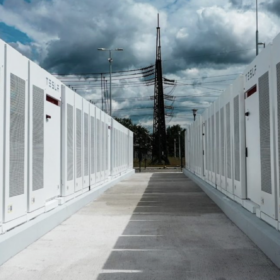
Poland shortlists 183 energy storage projects for EU funding
Poland’s state environmental fund says developers sought PLN 28 billion ($7.7 billion) for 20 GW and 122 GWh of storage projects – nearly seven times the program’s budget, with 183 projects eligible for funding.
Solar Stewardship Initiative publishes guide for solar supply chain
The Solar Stewardship Initiative’s (SSI) new buyers guide targets forced labor risk, supply-chain transparency, and compliance readiness in global solar procurement.

‘Back contact will reach cost parity with TOPCon before end of decade’
During a pv magazine Week Europe 2025 webinar, panelists forecast back contact (BC) solar cells’ market share will draw level with TOPCon towards the end of the decade, before tandem technology begins large-scale momentum in the early 2030s.
