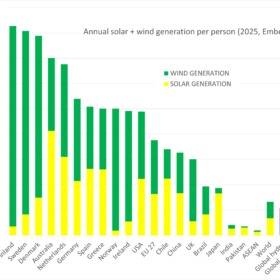
Solar and wind take over global power growth in 2025
In 2025, solar and wind dominated global energy growth, delivering around six times more new capacity than all other power sources combined and supplying nearly all new electricity demand. With rapid expansion led by countries like Australia and several European nations, solar and wind are now the fastest-growing and central drivers of the global energy transition.

Dutch buildings could host 36 GW of façade solar capacity
A new report from the Netherlands Enterprise Agency (RVO) estimates that building façades could offer up to 36 GW of technical solar PV potential, representing a significant but largely untapped resource. However, high costs, regulatory complexity, and lower performance compared to rooftop systems limit widespread adoption, currently making façade PV a niche solution for specific building types.

EU responds to energy price shocks with ‘homegrown’ clean energy push
The European Commission has launched the AccelerateEU strategy to address high energy prices driven by the Middle East conflict and its impact on fossil fuel markets. While specific measures for solar, renewables and storage are not yet clearly defined, the package includes the introduction of an Electrification Action Plan by summer.
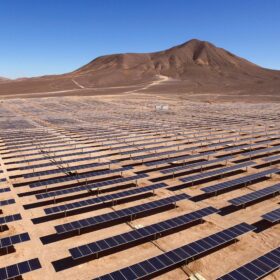
U.S. court blocks ‘de facto moratorium’ on federal solar permitting
A U.S. federal judge has issued a preliminary injunction against a Department of the Interior policy that required Trump-appointed Secretary of the Interior Doug Burgum’s approval for all renewable energy projects on public lands, effectively stalling tens of gigawatts of capacity.

Solar leads Ireland’s home energy upgrade grant scheme in 2026
Ireland recorded more than 10,000 applications for solar PV as part of its home energy upgrade program from January to March 2026, an increase of 65% on the same period for last year.

Peru opens complementary services market to support renewables
Peru’s energy ministry has proposed market-based reforms for complementary electricity services to improve grid stability amid rising solar and wind generation.

Repowering key for Japanese solar assets approaching feed-in tariff expiry
The refinancing of GSSG Solar and Voltaiyo’s 104 MW Jupiter Portfolio comes as Japan’s first-generation feed-in tariff (FIT) projects approach the end of guaranteed rates, forcing owners to reassess revenue strategies in a shifting post-FIT market.
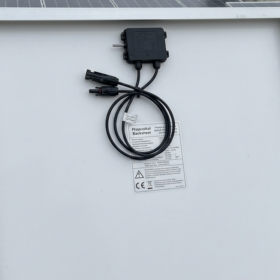
No evidence of PFAS leaching from solar panels, study finds
Researchers in the United States reviewed claims about PFAS in solar panels and found that while fluoropolymers may be used in limited components like backsheets or coatings, there is no confirmed evidence of PFAS leaching from commercially deployed modules. The study highlights widespread confusion between different PFAS types and emphasizes the need for clearer communication and transparency around fluoropolymer use in PV technologies.

Bangladesh opens public land to utility-scale solar under PPP model
Bangladesh has introduced a new regulatory framework to develop utility-scale solar projects on land owned by public agencies, with the Bangladesh Power Development Board acting as the contracting authority.

How to operate PV-driven residential heat pumps under time-varying tariffs
Researchers in the United Kingdom developed a scheduling model for residential heat pumps that reduces electricity costs while maintaining thermal comfort under dynamic tariffs and uncertain rooftop PV generation. It optimizes when to use grid power, PV energy, and building thermal storage.
