
UK government extends CfD contract length to 20 years
Changes announced ahead of seventh Contract for Difference (CfD) allocation round widely viewed as key to achieving government’s clean power targets for 2030. Target commissioning window for solar projects also extended in anticipation of larger capacity projects.

Mexico introduces new rules for self-consumption
Mexico’s energy regulator has issued new provisions to streamline the permitting process for self-consumption power plants between 0.7 MW and 20 MW, aiming to improve legal certainty for project developers.
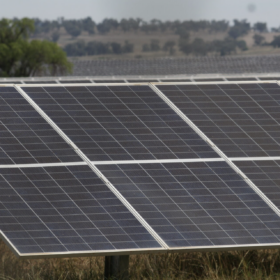
Solar farms in southern Australia face major curtailments by 2027
New large-scale solar farms in southeastern Australia could be forced to curtail up to two-thirds of their power generation by 2027 due to delays in energy transmission infrastructure projects, according to new analysis from the Australian Energy Market Operator (AEMO).

‘Inclusion is not a trend, it’s a standard we must build’
This week Women in Solar+ Europe gives voice to Jesús Alijarde, founder and CEO of Spain’s Ibersyd / Cerfo. He says one of the earliest biases he had to confront was the idea of men as protectors of women. “It may sound noble, but in practice, it reinforces inequality,” he states.
Behavioral factors behind residential PV adoption in China
Researchers have combined the theory of planned behavior, the technology acceptance model, and diffusion of innovations theory to investigate rooftop solar adoption in China. From a 1,200-person survey, they found that subjective norms and social influence from peers and community had a surprisingly more substantial effect than personal attitudes or perceived ease of use.
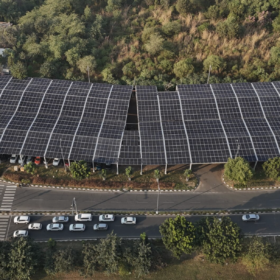
Captive solar gaining ground in India’s industrial manufacturing hubs
Industrial regions in Punjab, Haryana, Maharashtra, Gujarat, and Tamil Nadu are emerging as key markets for captive solar in India. High electricity tariffs, state-level incentives, and environmental targets from export-focused firms are accelerating adoption of distributed solar across the country’s industrial sector.
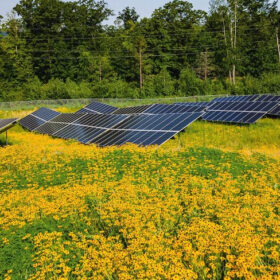
How community solar is impacted by the One Big Beautiful Bill
Despite the upcoming loss of US federal tax credits, community solar developers and investors can prevail if they prioritize states with strong legislation and financial incentives.

Netherlands increasing vigilance on solar inverter-related cybersecurity risks
The Dutch government said it remains vigilant on potential cybersecurity threats coming from solar inverters. It minimized, however, the risk of hidden hardware components in inverters and said these devices would be “easily detectable” by the Dutch authorities.

Solar curtailment on the rise in Poland
Curtailment of renewable energy in Poland rose 36% in the first five months of 2025, threatening the financial viability of solar plants as operators face long delays and reduced compensation for lost output.
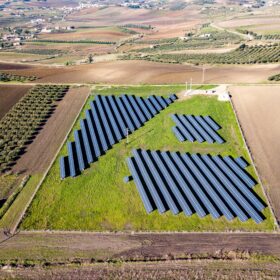
Italy’s latest renewables auction attracts 17.5 GW of solar project proposals
Italy’s first solar auction under the transitional FER X incentive scheme drew 17.5 GW in project proposals and an additional 2.87 GW in wind bids, according to state-run energy agency Gestore dei Servizi Energetici (GSE).
