
China’s new pricing policy
China announced new regulations this year that should result in a more market-oriented approach to renewables deployment. S&P Global Commodity Insights analysts Holly Hu and Anqi Shi say the new regulation No. 136 will play a crucial role in shaping China’s renewable energy sector, while introducing revenue uncertainties that will have a ripple effect on the global cleantech supply chain.
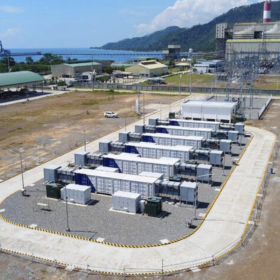
India offers $631.5 million to support 30 GWh of battery storage
The Indian government has announced viability gap funding (VGF) of INR 54 billion ($631.5 million) to support 30 GWh of battery energy storage systems (BESS), allocating capacity among 15 states and the state-owned power producer NTPC. The scheme provides INR 1.8 million/MWh and requires projects to be commissioned within 18 months through competitive bidding.
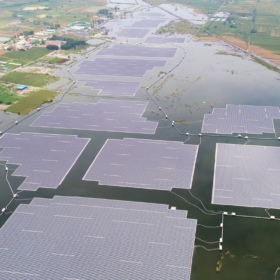
Water-based photovoltaics reach global capacity of 21.18 GW
An international research team has developed an index-based remote sensing method to see trends in the global development of water-based PV. It has found that China currently accounts for 80% of the global total deployed capacity.
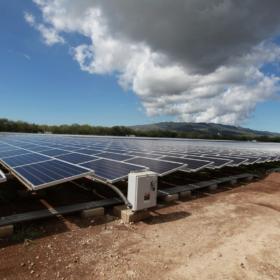
US solar developers secure over $1 billion for 1.4 GW of projects
US solar developers Soltage, Origis Energy, and rPlus Energies have secured more than $1 billion in financing across three major deals, signaling sustained investor confidence in utility-scale solar and storage despite US policy uncertainty. The transactions back more than 1.4 GW of solar and 1.8 GWh of battery capacity.
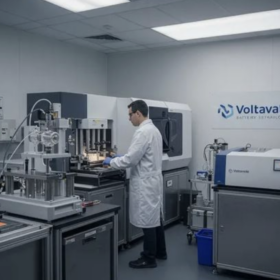
Voltavate raises funds to advance battery separator tech
Australian battery tech startup Voltavate has secured AUD 850,000 ($535,000) in an oversubscribed pre-seed funding round led by global investment firm Artesian.
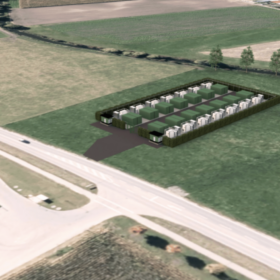
Green Flexibility to develop 80 MWh battery for German grid project
Grid companies LEW Verteilnetz and Bayernwerk have launched a pilot project to feed renewable energy into the electricity network in a more grid-friendly manner. One of the energy storage sites to be used in the project will come from Green Flexibility.
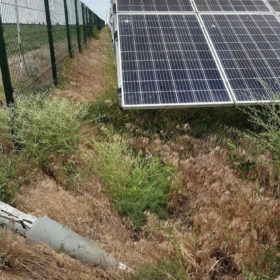
Ukraine’s ‘twin cities’ project funds solar for community energy resilience
The Ukrainian government is launching a €2 million ($2.3 million) pilot project with the municipality of Grafenwörth, Austria, to expand solar infrastructure and enhance local energy resilience.

Rooftop PV may ‘unintentionally’ exacerbate urban heat
New research from Hong Kong confirms that rooftop PV systems significantly contribute raise daytime temperatures in urban environments. The scientists explained that, although their findings highlight important urban resilience considerations, they should not detract from the broader benefits of PV systems for energy sustainability and carbon reduction.

Deakin University launches virtual energy network trial for solar trading
Researchers at Deakin University have launched a first-of-its-kind project exploring how Australian households and small businesses with solar and or battery systems can sell their excess clean energy to others without the technology.

Liquid insulation for sustainable transformers
Liquid insulation is one of the ways of ensuring transformers – which convert electric power from high voltages to lower voltages – remain safe. Mineral oil, however, has been the main insulating liquid in industrial power systems to date and sustanaible alternatives are strongly needed.
