Indian state utility to deploy 1.07 GW of solar for irrigation
Maharashtra State Power Generation Co. Ltd. (MAHAGENCO) says it will commission 1.071 GW of solar under the Indian state’s Solar Agriculture Feeder Scheme 2.0 to supply daytime irrigation electricity to more than 300,000 farmers.

Spain approves legislation to encourage energy storage, flexibility
The Spanish government has approved legislation to strengthen its electricity system following the major power outage the country experienced in April.

EU adopts state aid framework for cleantech industry
The European Commission has developed a new state aid framework under the Clean Industrial Solutions Act for Europe (CISAF) to support clean technology manufacturing across the European Union.
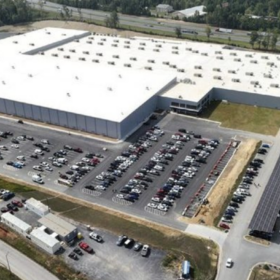
US solar manufacturers seek to match rhetoric with reality
Executives from Qcells, Talon PV and Solar Manufacturers For America (SEMA) say extending the Section 48E tax credit with the domestic content bonus levels the playing field so US manufacturers can pay off factory investments made in good faith under the credit.

French parliament rejects proposal for moratorium on solar, wind
The French National Assembly has rejected an amendment that could have jeopardized the country’s energy transition.

EU publishes non-price criteria for renewables auctions
The European Union has adopted new rules requiring member states to include non-price criteria such as sustainability, resilience, and project execution in renewable energy auctions.
France shifts electricity spot market to 15-minute intervals
France will shift its electricity spot market to 15-minute trading intervals starting this year, aligning with EU standards and adapting to increased renewable energy integration. The change will also affect producer compensation contracts.
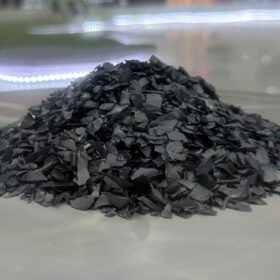
Polysilicon glut may reverse into shortage by 2028, says Bernreuter
China’s polysilicon capacity hit 3.25 million metric tons (MT) in 2024, driving global prices below $4.50/kg, says Bernreuter Research. The Germany-based market analytics firm warns the market could swing to a shortage by 2028 if capacity cuts overshoot.
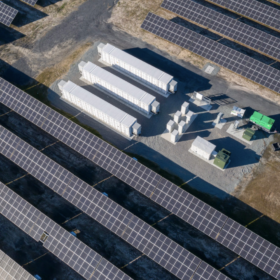
SECI launches tender for 1.2 GW of solar with 600 MW/3,600 MWh of storage
Solar Energy Corp. of India (SECI) has launched a tender for 1.2 GW of solar projects connected to India’s interstate transmission system (ISTS), integrated with 600 MW/3,600 MWh of energy storage systems on a build-own-operate (BOO) basis. Bidding closes Aug. 20.
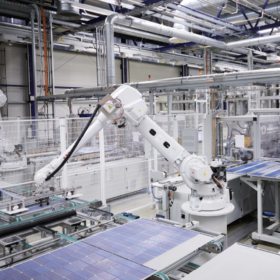
US policy uncertainty leads to $1.4 billion in clean energy cancellations
Around $1.4 billion in US clean energy manufacturing investments were canceled in May 2025 due to policy uncertainty, according to research group E2. Republican districts saw the greatest impact, with more than $9 billion in projects canceled, delayed or shut down so far this year.
