
pv magazine Focus: As storage scales, co-located solar projects must adapt
At pv magazine’s Focus event at Intersolar Europe this week, moderated by ESS News Editor Marija Maisch, the panelists discussed co-location and financing, alongside forward-looking presentations on market trends.

Women reshaping leadership narrative through collective reframing of power and presence
This week, during Intersolar 2025, Women in Solar+ Europe hosted a powerful workshop titled Women Reshaping the Leadership Narrative. Women leaders and experts from across the sector gathered to challenge outdated stereotypes and redefine authentic, inclusive leadership. From embracing vulnerability and rejecting the “too” labels often placed on women, to reframing feedback and leading without apology, participants explored how to turn long-held biases into strengths. The session fostered open dialogue, intergenerational insight, and a shared commitment to modelling change, leaving attendees inspired to keep reshaping leadership on their own terms.

Australian state preps up to 20 GWh of battery and pumped hydro capacity
The government of New South Wales (NSW), Australia, is granting grid access to 10 renewable energy and energy storage sites in the new Central West Orana Renewable Energy Zone (REZ), while utility AGL has acquired pumped hydro energy storage (PHES) projects at the Glenbawn and Glennies Creek reservoirs.
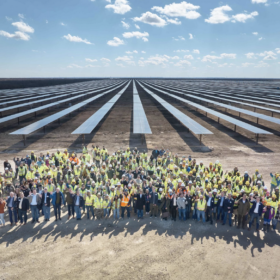
Watershed moment for Texas solar
As Texas suddenly finds itself a leader in both solar deployment and manufacturing, debate in the state legislature and US Congress could shape how much the Lone Star State once again will shape the nation’s energy trajectory.

Ohio Supreme Court rejects local opposition to block 325 MW solar project
Despite Ohio’s intensified local opposition and restrictive solar restrictions in recent years, the state’s Supreme Court sided with the Ohio Power Siting board to allow a 350 MW project in central Ohio.

‘Blaming renewables for Spain’s blackout is like faulting the thermometer for the fever’
The recent blackout in the Iberian grid should not be interpreted as failure of renewables. But it did provide Europe with a sign the energy system is changing, shedding light on the necessity to govern 21st-century technologies with 21st-century control systems.

How to empower Europe’s PV, storage and inverter stakeholders when segmental balancing unfolds?
EUPD’s 2024/25 rating assessed hundreds of PV, inverter, and storage brands active in Europe. Out of these brands, the shortlisted group went through an extensive rating process. These rated brands represent the top 2–3% of photovoltaic manufacturers globally, with slightly varying percentage thresholds for inverter and storage segments—each analyzed for their performance in financial resilience, innovation, market trust and credibility, and ESG leadership.
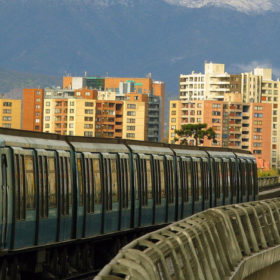
Chile can achieve emission-free electricity system by 2035 with technical and economic support
A study developed by the Chilean Association of Renewable Energies and Storage (ACERA AG) and the Institute of Complex Engineering Systems (ISCI) concludes that it is technically feasible to operate the National Electric System without fossil fuel generation, with investments in renewable energy storage, and flexible demand.

How to make solar module stockpiling cost-effective
Researchers investigated which solar module stockpiling conditions could help to ensure stable solar PV deployment at the lowest cost in Europe. The scientists demonstrated that stockpiling is cost-effective primarily under unfavorable import conditions.
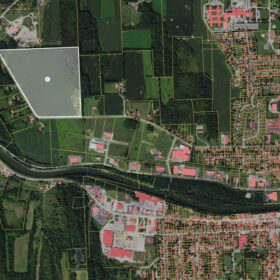
Strategies for de-risking early-stage renewable energy projects
Over 70% to 90% of early-stage projects fail and are never constructed, according to findings reported by Paces.
