
Curtailing solar photovoltaics is here to stay, overbuilding PV will become normal
As the penetration of variable renewable energy increases, curtailment of solar PV generation will only increase. Since curtailment will almost always be cheaper than investing in new transmission capacity or new grid-scale storage, curtailed energy should be rewarded, so that PV investment decisions can include curtailment as one of the flexibility options for grid operators.

NTPC allocates 1.2 GW of wind-solar hybrid capacity in India at $0.040/kWh
Adani Renewable Energy, Adyant Enersol (Datta Infra), Ampin Energy, Green Prairie Energy (EverGreen Power) and JSP Green (Jindal Renewables) have won in NTPC’s latest auction for 1.2 GW of wind-solar hybrid capacity in India.
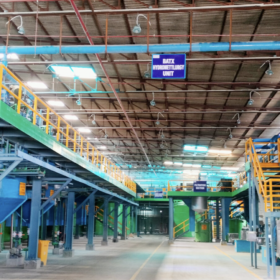
BatX Energies opens lithium battery recycling plant in India
BatX Energies says it has opened a lithium battery recycling facility in India to extract critical materials using a hydrometallurgical process.
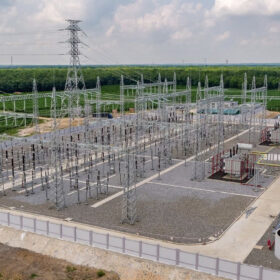
A tumultuous year for solar and batteries
In five key trends, pv magazine looks back over a year that saw PV module prices fall lower than many thought possible, while demand was restrained by grid congestion, among other challenges. Energy storage has had a strong year and geopolitics is seeing solar and battery manufacturing enter new regions as competition drives technical innovation.
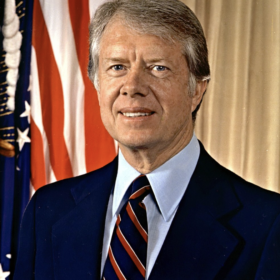
Jimmy Carter’s clean energy legacy
The world has lost a forward-thinking clean energy proponent, who 44 years ago recommended a solar strategy to move the United States toward energy security by using abundant, clean energy sources.
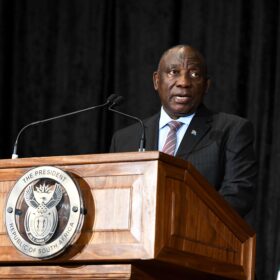
South Africa picks bidders for 1.76 GW of solar, battery projects
The South African government has named preferred bidders for 16 renewable energy projects, totaling ZAR 44.2 billion ($2.4 billion) in investments, to drive solar and battery development.
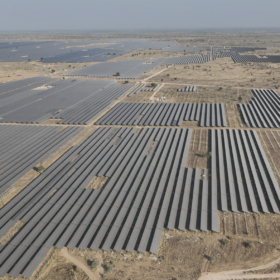
SECI allocates 600 MW solar in India at $0.036/kWh
Solar Energy Corp. of India (SECI) has allocated 600 MW of solar at $0.036/kWh in its 1 GW solar tender, with Acme Solar, Adani Renewable Energy, and ReNew emerging as winners.
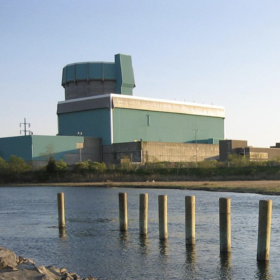
NY utility approves battery storage project on shuttered US nuclear site
The Long Island Power Authority (LIPA) has approved 79 MW and 50 MW battery storage projects in Suffolk County, New York state. It is granting Key Capture Energy capacity and dispatch rights under 20-year power purchase agreements (PPA).
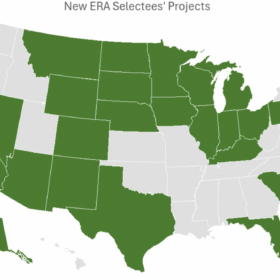
US rural electric co-ops secure $4.37 billion in clean energy funding
Funding from the US Department of Agriculture’s Empowering Rural America Program is available to rural electric cooperatives in Arizona, Colorado, Florida, Georgia, Minnesota, Nebraska, and Texas.

China’s first zero-carbon highway includes PV, paving way for sustainable transport
China’s first zero-carbon highway, the 152.7 km Jinan-Hefei Highway, has opened for traffic, featuring renewable energy systems, advanced tracking technology, and design elements aimed at cutting net carbon emissions by 9,000 tons per year.
