
ARTsolar challenges local content compliance in South African solar tenders
A High Court in South Africa ordered the country’s Ministry of Mineral Resources and Energy to deliver full documentation relating to three solar tenders awarded in 2021 and 2022 to local solar manufacturer ARTsolar, after the company questioned if the preferred bidders had followed local content requirements for PV modules set out in the tenders. ARTsolar told pv magazine its legal team is currently reviewing the documentation it has received.
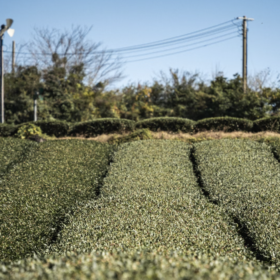
South Korea’s first agrivoltaics law leaves half of farmland off-limits
South Korea’s National Assembly has passed the country’s first dedicated agrivoltaics legislation, enabling dual use of agricultural land for solar power generation, but the law excludes zones covering nearly half of the country’s farmland, according to a Seoul-based nonprofit group focused on energy transition.
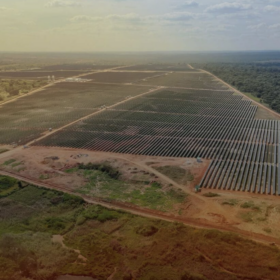
Zambia’s largest solar plant goes online
The 136 MW Itimpi II solar plant is Zambia’s largest operational solar project to date. Elsewhere in the country, an investment agreement has been signed to add 250 MW of solar to the 100 MW Nambala solar power plant.
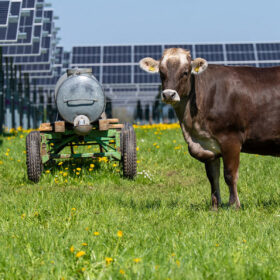
Germany allocates 2.3 GW in latest ground-mounted PV tender, lowest bid comes in at €0.039/kWh
The latest round of Germany’s PV tender scheme was largely oversubscibed.

New Zealand moves to reduce red tape for rooftop solar
The New Zealand government has ordered a review into the installation of residential and small- to medium-scale solar as it seeks to accelerate the rollout of rooftop PV.
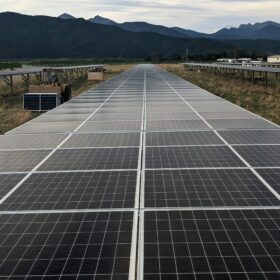
Ireland urged to create national clearing house to streamline solar projects
The CEO of Irish PV association Solar Ireland, Ronan Power, told pv magazine that despite a healthy project pipeline and investor appetite, ground-mounted PV projects are not being delivered as fast as they could be. A national clearing house to provide more defined communication at the early stages would help developers deliver faster.

Floating solar offers Morocco’s dams antidote to evaporation loss
Moroccan researchers say floating PV (FPV) installations on the country’s dams could simultaneously cut evaporation losses and generate electricity, but the country lacks a regulatory framework to enable large-scale deployment.

Egypt installs 800 MW of solar in 2025
Latest analysis from GlobalData expects Egypt’s annual solar additions to reach above 2 GW over the next three years, increasing to above 3.5 GW from 2029 onwards. Cumulative capacity is expected to grow from around 2.9 GW at the end of 2025 to 34.3 GW by the end of 2035.

Grid operators may reduce renewables penetration if data center growth continues unchecked, says ENTSO-E
A new report from the European Network of Transmission System Operators for Electricity explores the potential for data centers to become flexible assets in Europe’s electricity system, as well as how to manage grid planning and grid security.

Bolivia presents new law to boost renewables, private investments
The new draft law on electricity and renewable energy, developed by the Ministry of Hydrocarbons and Energy, is entering its technical, legislative and public consultation phase, with anticipated changes to generation, transmission, distribution and regulatory frameworks.
