ARTsolar challenges local content compliance in South African solar tenders


South African solar manufacturer ARTsolar is in the process of reviewing documentation relating to three public procurements after it claimed the tenders’ local content requirements had not been followed by the independent power producers (IPPs) awarded contracts.
The Durban-headquartered manufacturer filed an application in the Gauteng High Court in October 2024, claiming there had been “consistent and rampant circumvention of the local content requirements” among preferred bidders and that South Africa’s Department of Mineral Resources and Energy (DMRE) and Department of Trade, Industry and Competition (DTIC) had failed to enforce the provisions.
ARTsolar’s application named 26 respondents in total, including multiple government ministers, South Africa’s electric utility Eskom, the country’s National Transmission Company and the 18 IPPs and associated joint venture companies that were awarded contracts across the three tenders.
The tenders in question are the Risk Mitigation Independent Power Producer Procurement Programme (RMIPPPP), awarded in 2021, and bid windows five and six of the country’s flagship Renewable Energy Independent Power Producer Procurement Program (REIPPPP), awarded in 2021 and 2022.
ARTsolar’s claim explains each tender had a minimum local content threshold, requiring a percentage of laminated PV modules to come from local sources. It says this requirement would have formed part of the implementation agreements signed between DMRE and each preferred bidder and adds that DTIC held responsibility for ensuring compliance with these local content requirements.
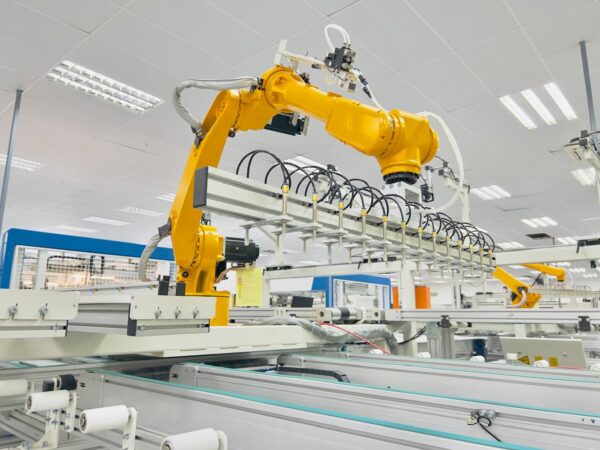
Image: ARTsolar
In his founding affidavit, ARTsolar chairman Bebinchand Seevnarayan wrote that it had “become apparent that many of the successful IPPs have failed to comply with these local content requirements, and it is suspected that they have been sourcing cheaper, foreign-manufactured PV panels instead.”
“The DTIC’s failure to enforce local content requirements creates a significant issue, as it allows preferred bidders to cut costs by sourcing cheaper, foreign-manufactured PV panels, thereby avoiding the higher expenses associated with complying with local content obligations,” Seevnarayan wrote. “Despite this noncompliance, these bidders still benefit from the full contract value, which was intended to cover the costs of meeting local content requirements. Furthermore, under the power purchase agreements (PPA), Eskom is obligated to purchase the electricity generated by these projects at the maximum contract value. This means that even though the bidders reduced their expenses by disregarding local manufacturing obligations, they continue to reap substantial profits from the PPA for the duration of the agreement.”
Seevnarayan said he was turning to the court to restore transparency, enforce the rule of law and protect the local manufacturing industry from being sidelined in favour of cheaper foreign imports.
“Beyond the harm to ARTsolar and other local PV manufacturers, these practices have a far-reaching impact on public interests, hurting our economy, local jobs, tax revenue, industry growth, skills development and South Africa’s capacity to tackle its energy crisis,” Seevnarayan claimed.
In a court order published in December and seen by pv magazine, the High Court of South Africa ordered the government to produce the full record of decisions related to the local content requirements for the tenders.
Local press in South Africa reported some of the 27 respondents to the claim opposed the released, arguing that some of the documentation was sensitive. The court order stipulates that any documentation deemed as confidential by the respondents was made available to ARTsolar’s legal representatives and an independent expert.
ARTsolar General Manager Viren Gosai told pv magazine the company began receiving the requested confidential and non-confidential documents in February. “The information has been submitted directly to our legal team and is currently undergoing review and assessment as part of the legal process,” Gosai confirmed.
Gosai added that ARTsolar’s review application seeks to assess whether the applicable localization and procurement requirements were complied with in the awarding and implementation of the projects. “Our position is that these projects should comply with the applicable procurement and localization requirements in accordance with the rule of law, as these obligations formed part of the bid conditions and contractual framework under which the projects were awarded,” he explained.
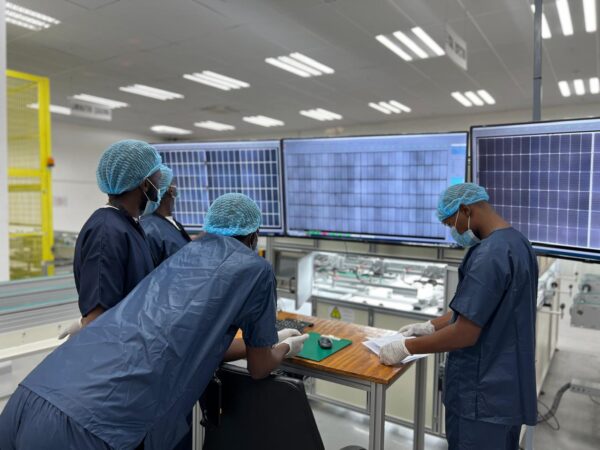
Image: ARTsolar
Gosai continued that the local industry has made substantial investments to ensure it is capable of meeting the required standards, specifications and demand associated with these programs.
“ARTsolar recently created over 300 jobs and invested significantly in machinery, technology and manufacturing capability upgrades at its Durban facility in anticipation of demand arising from localization commitments linked to these programs,” he told pv magazine, before encouraging stakeholders associated with the projects to apply appropriate oversight and due diligence in relation to localization and procurement obligations.
“We remain supportive of South Africa’s renewable energy objectives and believe that proper implementation of localization frameworks can contribute meaningfully towards sustainable industrial growth, investment certainty and long-term job creation,” Gosai said.
Last year, ARTsolar announced a collaboration with China’s JA Solar, with intentions to expand local solar module production.
This content is protected by copyright and may not be reused. If you want to cooperate with us and would like to reuse some of our content, please contact: [email protected].

Please login to comment