
Another 11 solar mini-grids for Mozambique
The public body responsible for expanding access to electricity is seeking consultants to prepare a tender for rural PV mini-grids.

Indian Railways tenders for 1 GW of solar
Developers have until June 30 to lodge bids to develop plots of solar capacity across the national rail network which offer a maximum INR2.71/kWh ($0.036) for the electricity generated under a 25-year contract.
Chinese coal miner starts work on world’s biggest solar-powered hydrogen facility
Baofeng Energy appears to be switching its focus to hydrogen production and says its new project will be powered by two 100 MW solar plants and will start producing 160 million cubic meters of hydrogen annually from next year.
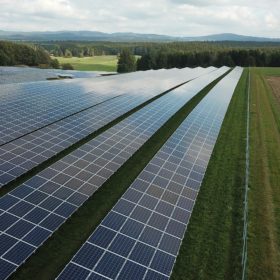
LCOE from large scale PV fell 4% to $50 per megawatt-hour in six months
Analysts at Bloomberg New Energy Finance say the lowest-cost projects financed in Australia, China, Chile and the UAE in the last six months hit a levelized cost of energy of just $23-29/MWh and the best solar and wind projects will produce electricity for less than $20/MWh by 2030.
Solar, wind and hydro resilient during Covid-19 crisis
A study by the International Energy Agency into the chilling effect of the Covid-19 pandemic on energy demand states renewables will be ‘the only energy source likely to experience demand growth for the rest of 2020’. The slower the economic recovery, the more the fossil fuel industry will suffer.

The week in perovskites
As a focus of research at leading institutes the world over, new developments in the perovskite field come thick and fast almost every week. From x-ray observations on a nanoscale to financing and plans for mass production, pv magazine is bringing together some of the most exciting developments of recent weeks.
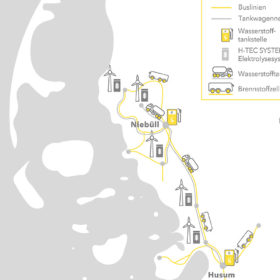
North German pilot hydrogen project gets cash boost
German company GP Joule wants to build hydrogen transport infrastructure in North Friesland. The electricity generated by five wind farms in the region will be converted to green hydrogen to be delivered to filling stations in Husum and Niebüll and used by two fuel-cell buses and five cars.

France makes 44 GW solar target official
Today’s edition of the Official Journal of the French Republic featured two long-awaited decrees: One concerning the multi-year energy program and another on national carbon budgets and the state’s low-carbon strategy.

The raw materials needed for the European Green Deal
A team tasked by the European Commission with estimating the raw material requirements of the European energy transition found if global PV roll-out is high, and the component requirements of certain solar technologies don’t improve by a greater margin, some elements could end up in short supply.
Instant battery electrodes – just two minutes in the microwave
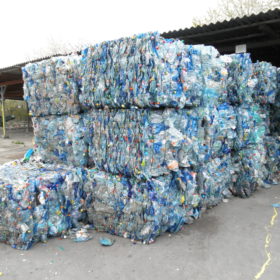
Scientists in the United States have used microwaves to convert ubiquitous plastic packaging material polyethylene terephthalate into a battery electrode component. The researchers say anodes based on the material could be suitable for both lithium-ion and sodium-ion devices.
