
Saudi Arabia adds around 7.8 GW of solar in 2025
Saudi Arabia had a record year for solar deployment last year, taking cumulative capacity past 12.4 GW. GlobalData is forecasting annual deployments to increase in the coming years but notes that they remain behind the pace required to meet the country’s target of 130 GW of renewables by 2030, instead nearing the goal by 2035.
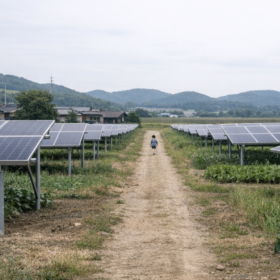
South Korea targets 2,500 community solar cooperatives by 2030
The South Korean government has launched a national drive to establish community-owned village solar cooperatives across the country, with more than 500 sites to be selected this year and KRW 550 billion ($366.4 million) in national funds earmarked for 2026.
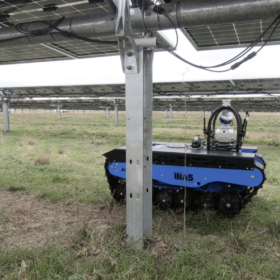
Australian science agency trials AI robots for solar farms
Australia’s national science agency says AI-driven robots could reshape solar maintenance across large-scale PV projects after successfully trialing the cutting-edge technology.
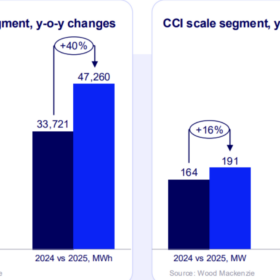
US installs record 18.9 GW of energy storage in 2025
The United States added 18.9 GW of energy storage capacity in 2025, a 52% increase year on year, according to Wood Mackenzie.

Smart meters are vulnerable gateways to cyberattacks
Researchers found that widely deployed smart meters pose a “massive” cybersecurity risk, potentially enabling data manipulation, energy theft, and service disruption. They propose a new detection method using state estimation and statistical boundaries to more accurately identify cyberattacks, outperforming traditional techniques despite higher computational demands.

Waaree approves INR 39 billion solar glass factory investment
Waaree Energies has approved a capital expenditure of INR 39 billion ($415 million) to build a solar glass manufacturing facility with a capacity of 2,500 metric tons (MT) per day through its subsidiary Waaree Green Glass.
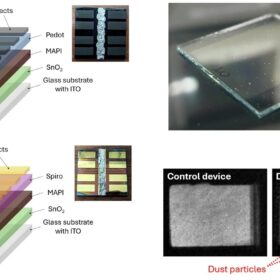
Perovskite solar cells can be made without expensive cleanrooms
Swansea University researchers found that perovskite solar cells can tolerate dusty fabrication environments, performing almost as well as those made in cleanrooms. The findings suggest low-cost, scalable production may be possible without ultra-sterile conditions, potentially accelerating cell and module manufacturing.
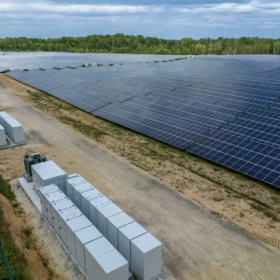
France proposes linking solar subsidies to storage as prices turn negative
France’s energy regulator plans to link PV support to storage as negative power prices increase and reduce solar revenues.
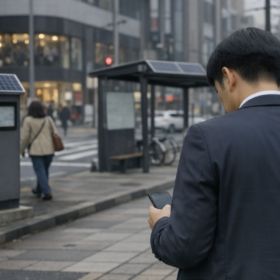
Solar curtailment reaches Tokyo, Japan’s last holdout grid area
Tokyo’s grid has joined every other transmission system operator area in Japan in experiencing economic curtailment, as solar output growth outpaces the flexibility of the country’s largest regional power market.
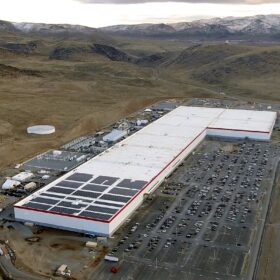
Tesla advances plan to build 100 GW of U.S. PV manufacturing capacity by 2028
Job advertisements on Tesla’s website outline the 100 GW ambition and follow reports the company is in talks with Chinese firms for the purchase of $2.9 billion worth of equipment for solar manufacturing.
