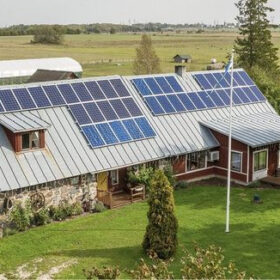
Solar leading Baltic states to energy security
In recent years, the Baltic countries have experienced a solar generation boom as the region seeks to kill two birds with one stone. These nations aim to break away from years-long energy dependence on Russia amid growing security concerns while also continuing to prioritize the green energy transition.
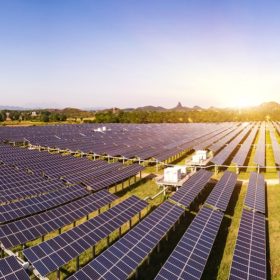
DNV’s solar asset modeling platform launches in Europe
Solar Resource Compass provides users with an online service that can deliver indicative energy production estimates for any solar project, including the comparison of multiple irradiance datasets and the calculation of site-specific losses for dust and snow. Many features are still being beta-tested in Europe, but DNV tells pv magazine it is planning to roll out the tool in most of Asia, the Middle East, Latin America and Oceania in 2024.

Israel to provide incentives for hybrid solar inverters
Israel’s Ministry of Energy says it will exempt hybrid solar inverters from purchase tax and customs duties. It claims that these policy mechanisms will help during energy emergencies.

Masdar buys out Greece’s Terna Energy in €3.2 billion deal
Masdar has agreed to acquire initially 67% of Greece’s Terna Energy, a developer of clean energy infrastructure, in a €3.2 billion ($3.4 billion) deal.

Alight secures grid connection for 100 MW solar park in Finland
Swedish solar developer Alight has obtained a grid connection for its 100 MW solar project in Eurajoki, western Finland. Construction is expected to start later this year.
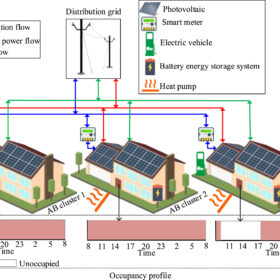
Peer-to-peer energy trading framework for residential buildings
Scientists in the UK developed a controller for B2B trading platform that considers thermal and visual comfort. Their modeling shows that participating in local energy trading increases the robustness of the control systems in residential microgrids in face of uncertainty in the occupant comfort level.
UK flexibility service set for year-round commercial rollout
Electricity system operator (ESO) plans to expand Demand Flexibility Service, financially rewarding consumers and businesses in Great Britain for reducing consumption at times of peak demand.
Hive Energy secures grid connection permit for 215.6 MW of solar projects in Serbia
UK’s Hive Energy said the projects will feature battery energy storage systems that equate to 10% of the overall solar capacity.
Funding round opens for off-grid solar across West Africa
The Economic Community of West African States (ECOWAS) is offering grants from $10,000 to $250,000 in the second funding round of the Regional Off-Grid Electricity Access Project (ROGEAP) to develop off-grid solar in 13 West African and sub-Saharan African countries. The application deadline is June 23.
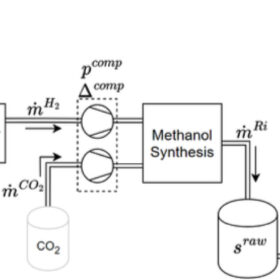
PV-to-methanol plants may maximize returns in reserve markets
New research from Denmark shows PV-to-methanol facilities may achieve 30% lower levelized cost of methanol through engagement in reserve markets. The researchers examined the ability of a PV-to-methanol plant to contribute to the grid in frequency containment reserves (FCR), automatic frequency restoration reserves (aFRR), and manual frequency restoration reserves (mFRR).
