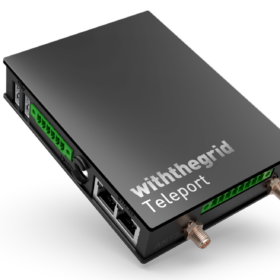
Real-time interface to reduce Netherlands’ grid congestion
All new PV plants over 1 MW in the Netherlands will have to use a real-time interface to make their facilities better communicate with the grid operator starting from next year. Utrecht-based Withthegrid, has developed an interface that is compatible with a number of brand-name inverters.

Israel frees up grid space for 2 GW of renewables
Israel has announced plans to deploy 2 GW of grid-connected renewables. It will allow for additional renewable plants to be built without causing grid congestion, based on specific parameters.
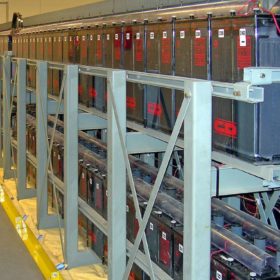
Distributed PV, battery storage curtailment in low-voltage networks
University of New South Wales (UNSW) researchers have looked at energy losses in South Australia and have identified average curtailment of 1.5% for distributed PV sites and 0.2% for distributed PV coupled with batteries, but some locations experience generation losses of up to 25%.
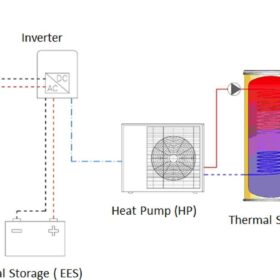
PV-powered heat pumps with thermal, electrical storage
Italian researchers have looked at the potential of thermal and electrical energy storage to improve self-consumption rates in buildings when coupled with PV-powered heat pumps. They have concluded that such an approach could yield self-consumption rates of more than 80%.
What can Western utilities learn from emerging-market peers?
While electric companies in the Global North wrestle with how to keep the lights on as ever bigger solar and wind park capacities come online, developing-world utilities are experimenting with new ways of working and transforming the relationship between themselves and millions of new customers.

Prysmian completes world’s longest subsea interconnector
Italy’s Prysmian has finalized the deployment of a high-voltage direct current (HVDC) submarine transmission line spanning 1,400 km, connecting Denmark to the United Kingdom.
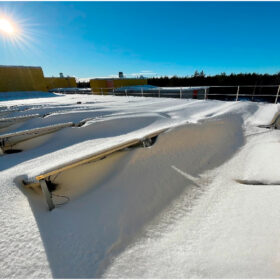
Scientists analyze seasonal performance of rooftop, vertical PV in the Arctic
New research from Finland shows that the best season for rooftop PV generation in the Arctic is spring, and that the best tilt angle for rooftop systems is 28 degrees. It also showed that vertical PV installations perform better in winter.
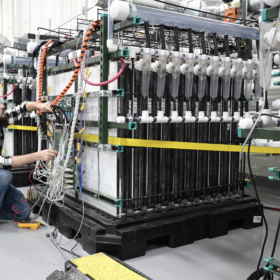
Multi-day energy storage increases grid capacity by factor of 10
Form Energy has released a white paper that provides further evidence that multi-day energy storage, like its iron-air technology, can substantially reduce the costs for New York to achieve its ambitious decarbonization targets.

California utility pays $175,000 settlement for false ‘renewable’ advertising
The Southern California Gas Company has agreed to a settlement of $175,000, without admitting fault, to cease claims that their gas is ‘renewable’. The company will also update its website to clarify that only 5% of its gas comes from renewable sources.
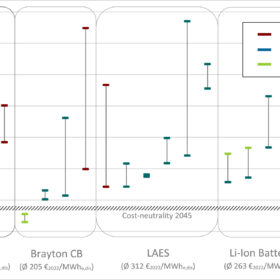
The economics of storing renewables with Carnot batteries
A group of researchers in Denmark has investigated how Carnot batteries may be used to store renewable energy in their home country and have found that these devices may provide a significant contribution only under a certain cost threshold.
