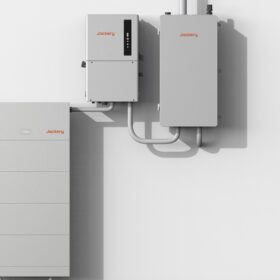
Jackery, Geneverse present new residential energy storage system
The two US-based companies are showcasing their new home energy system with up to 123.2 kWh of storage at RE+ 2024 event in the United States. The new product has four MPPTs, with a max current of 16 A per string.

SmartHelio launches AI solar forecasting tool with 98.5% accuracy
SmartHelio has developed an AI solar forecasting tool with 98.5% accuracy, using socioeconomic details and climate data for predictive analytics.

Ice-source heat pump system for residential applications
UK scientists designed a new heat pump concept that they claim could be particularly beneficial to newly developed areas or potential residential complexes. The system uses ice or ice slurry as the heat source and its energy consumption is reportedly lower than that of several types commercially available heat pumps.

Australian redox flow battery manufacturer ramps up capacity
Allegro Energy, an Australian redox flow battery developer, aims to “rapidly accelerate” its manufacturing capacity after closing a AUD 17.5 million ($11.6 million) funding round that attracted major domestic and international investors.

Japanese scientists build heterojunction solar cell based on titanium dioxide, selenium
Scientists in Japan developed a 4.49%-efficient solar cell based on titanium dioxide and selenium. The devices is based on a new approach aimed at reducing interfacial recombination and increasing open-circuit voltage and efficiency.

Midea presents 4.5 kW residential heat pump
The Chinese manufacturer said its new propane heat pump doesn’t need an outdoor unit and is able to operate with temperatures down to -20 C.

Lightweight ventilated BIPV system for low-load rooftop applications
Scientists in China have designed a ventilated building-integrated photovoltaic system that relies on flexible solar modules with a weight of 6 kg/m2. The system also uses an airflow channel under the PV panels to reduce their operating temperature and increase their power yield.

France records 233 hours of negative electricity prices in H1
KiloWattSol, an independent solar consultancy, says there were 308 hours of negative electricity prices from the start of 2024 to Aug. 23 – more than double the 147 negative hours recorded in 2023.

New algorithm enables cost-optimized operation of residential heat pumps
Researchers in Austria have developed a new predictive control algorithm that can reportedly improve comfort levels in houses equipped with heat pumps. The algorithm also enables price predictions based on analysis of day-ahead electricity prices.
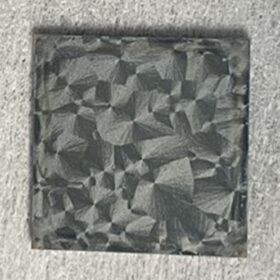
Terpyridine-passivated perovskite solar cells achieve 25.24% efficiency
An international team of researchers demonstrated perovskite solar cells treated with a molecular passivator based on π-conjugated terpyridine Lewis-base molecules that achieved 25.24% power conversion efficiency, with 90% retained after 2,664 hours of light exposure. The treatment reportedly works at high concentrations without damaging the perovskite film or diminishing cell performance. A protocol was published to reproduce the results, opening the door to testing it on a range of perovskite absorbers.
