
Solar cell based on 2D Dion-Jacobson perovskite achieves 19.11% efficiency
Chinese researchers claim to have developed an “ultrastable” perovskite solar cell based on a two-dimensional, Dion-Jacobson phase perovskite. The device was constructed with blade coating technology and is scalable, according to its creators.
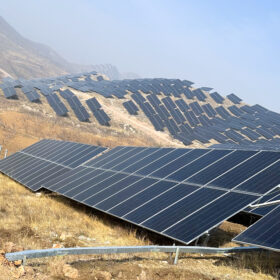
Mibet releases mounting system for utility-scale PV
The Chinese company said its new GT1 product is made out of hot-dip galvanized Q235B steel and can withstand wind speeds of up to 60m/s.

Reactive power management key to advancing grid stability
In its latest monthly column for pv magazine, IEA-PVPS provides a comprehensive overview of the state-of-the-art practices, best practices, and recommendations for managing reactive power amidst the growing integration of distributed energy resources (DERs). The article describes the regulatory frameworks and practical applications, underscoring the essential role of reactive power management in maintaining a stable and efficient power grid.
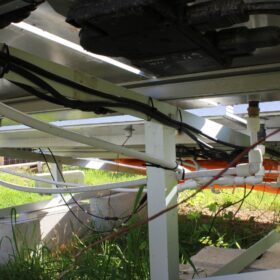
PV module cooling tech based on water chamber
Scientists in Malta have created an after-market cooling solution that can be fitted to existing standard PV modules. The system is based on a water chamber placed at the backside of the module and can reportedly provide a net electrical energy gain of more than 9%.
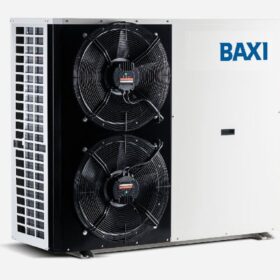
Baxi launches mid-temperature heat pump for commercial buildings
The UK-based manufacturer said its new air-to-water Auriga heat pump features a seasonal coefficient of performance (SCOP) ranging from 3.33 to 4.83 and noise levels of 43 dBA to 65 dBA.
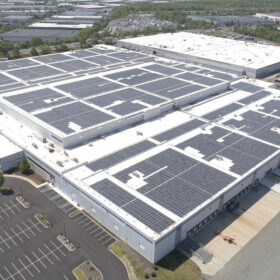
Data center power loads threaten corporate net-zero goals
The world’s reliance on the internet, the shift to cloud computing, and the emergence of AI all fuel demand for more and more data centers. The International Energy Agency (IEA) projects that by 2026, data centers will consume more than 800 TWh annually, more than double their consumption in 2022. Tristan Rayner takes a look at the role that renewable generation plays in powering a digital world.

Year-to-year solar variability peaks in Europe, Australia, Argentina, and China
In a new weekly update for pv magazine, Solcast, a DNV company, reports that the regions with the highest year-to-year variability in irradiance include Central and Northern Europe, East Coast Australia, Northern Argentina, and China, with Africa exhibiting the most stable irradiance year-on-year.
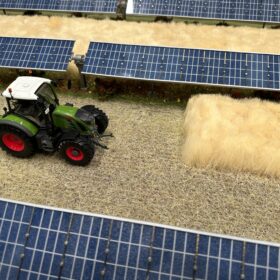
Researchers find agrivoltaics have LCOE of $0.039/kWh, 7-year payback time in India
Indian researchers have compared the performance of an agrivoltaic system to monofacial and bifacial rooftop PV systems, and have found that the agrivoltaics setup had a shorter payback time and lower levelized cost of energy. Their analysis of performance considered panel temperature, power output, land equivalent ratio, and reliability.
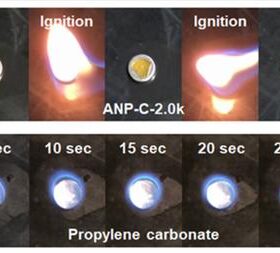
Safe, long-cyclable lithium metal battery for high temperatures
A research team at the University of Hong Kong (HKU) has developed a new generation of lithium metal batteries, representing a significant advancement in the field. The innovation centers on microcrack-free polymer electrolytes, which promise extended lifespan and enhanced safety at temperatures as high as 100 degrees Celsius.
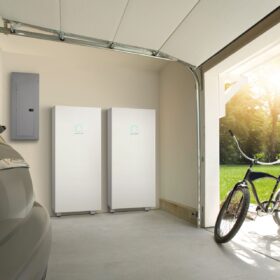
How long do residential solar batteries last?
Multiple factors affect lifespan of a residential battery energy storage system. We examine the life of batteries in Part 3 of our series.
