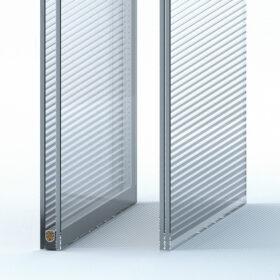
Panasonic testing BIPV glass based on perovskites
Panasonic is now testing perovskite-based power-generating glass with Japanese property developer Mitsui Fudosan Residential at a new building in Kanagawa prefecture, Japan.
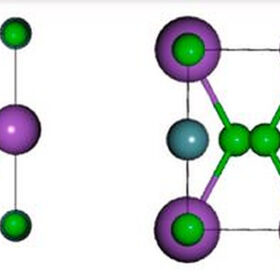
New perovskite material for lead-free solar cells
An Algerian research group has analyzed the electronic, elastic, optical, and thermoelectric characteristics of the KGeCl3 perovskite to verify if this lead-free material may be used for solar cells and other electronic devices. The scientists found that the novel material has a direct bandgap semiconductor with bandgap energies of 0.92 eV, 1.26 eV, and 1.88 eV for cubic, tetragonal, and orthorhombic phases, respectively.
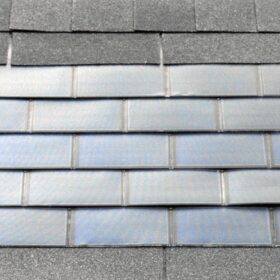
IEA-PVPS releases guide for applying innovation system approach to BIPV
IEA-PVPS has published a new handbook that provides support for Technological Innovation System (TIS) analysis for building-integrated photovoltaics (BIPV).
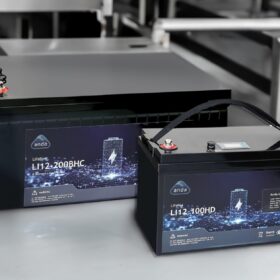
Anda-Olsen unveils lithium iron phosphate batteries
Anda-Olsen launched new LiFePo4 batteries that come with a built-in heating elements that reportedly makes them safe to use even in freezing temperatures. The manufacturer offers the new product in two versions with a nominal capacity of 100 Ah and 200 Ah, respectively.
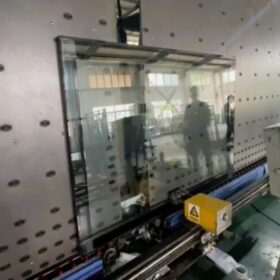
ClearVue next-gen ‘solar window’ powers through mass production run
Australia’s ClearVue Technologies says it has confirmed the scalability and “commercial viability” of its second-generation integrated glazing units, following a mass production run using a standard manufacturing line at a factory in China.

Prysmian completes world’s longest subsea interconnector
Italy’s Prysmian has finalized the deployment of a high-voltage direct current (HVDC) submarine transmission line spanning 1,400 km, connecting Denmark to the United Kingdom.
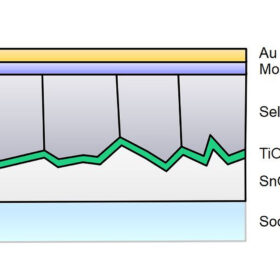
Selenium solar cell built with laser-annealing achieves record fill factor of 63.7%
Built by Danish researchers, the device also achieved a power conversion efficiency of 5.0%. They designed the cell with a soda-lime glass substrate, a tin oxide (FTO) layer, an electron transport layer made of titanium oxide (TiO2), a selenium absorber, a molybdenum oxide (MoOx) layer, and a gold (Au) metal contact.
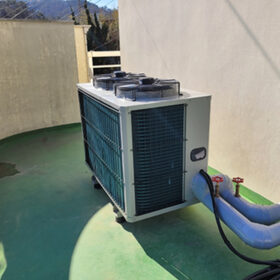
Integrated PVT–air source heat pump for deployment in limited space
South Korean scientists built an air source heat pump integrated with a photovoltaic thermal unit that can reportedly achieve an average heating and cooling coefficient of performance (COP) of 3.54 and 3.31, respectively. The system is also claimed to be 44% cheaper than ground source heat pumps combined with PVT energy.

Redway Power launches lithium iron phosphate battery for residential use
China’s Redway Power has developed a new lithium iron phosphate battery system with a nominal voltage of 12.8 V and a nominal capacity of 200 Ah.
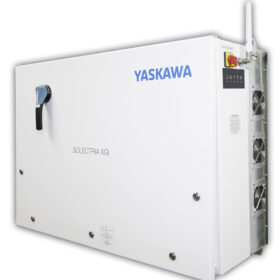
Yaskawa Solectria Solar introduces 175-250 kW utility-scale string inverters
Yaskawa Solectria Solar has developed new utility-scale string inverters with capacities ranging from 175 kW to 250 kW. They are optimized for use with First Solar modules and qualify for the US domestic content bonus tax credit.
