
Solar module prices rise faster than expected in February
Solar module prices increased by €0.01 ($ 0.012)/W to €0.015/W in February, lifting levels 15% to 18% above the December 2024 low despite falling wafer costs, as manufacturers seek to restore margins after prolonged losses.
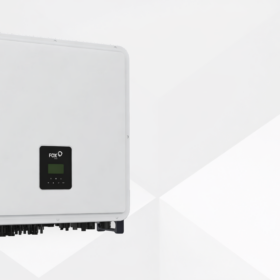
Fox ESS releases hybrid inverters for commercial PV
The inverters offer up to 99.2% efficiency, 200% PV oversizing, dual battery inputs, IP65 protection, and support for installations up to 144 kWh of storage capacity.
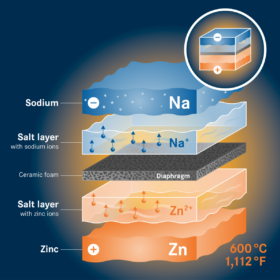
High-temp sodium-zinc batteries reveal causes of rapid capacity loss
Helmholtz-Zentrum Dresden-Rossendorf (HZDR) researchers have used operando X-ray imaging to reveal why sodium-zinc molten-salt batteries, operating at around 600 C and promising for stationary energy storage due to low-cost, abundant materials, experience persistent capacity loss.
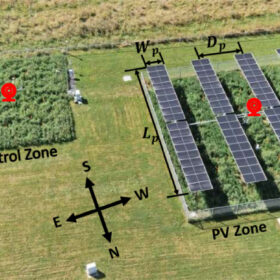
How airflow modifications in agrivoltaics affect crop yield, energy output
New research from France shows that PV panel height critically influences airflow and evapotranspiration in agrivoltaic systems, with panel heights of less than 3 m affecting crops through altered airflow. The scientists highlighted the need for site-specific measurements and computational fluid dynamics to accurately estimate water and energy exchanges beneath PV panels.
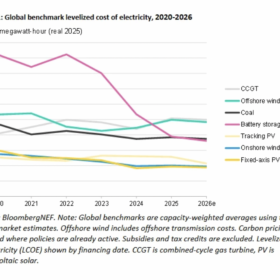
Solar LCOE to fall 30% by 2035, says BloombergNEF
Analysis from BloombergNEF finds the levelized cost of electricity (LCOE) of a typical fixed-axis solar farm increased by 6% year-on-year in 2025 to stand at $39/MWh, but innovation and competition are expected to see costs fall by 30% through to 2035.
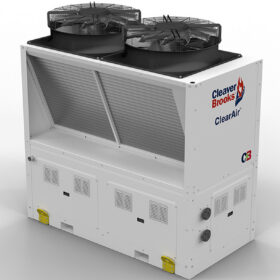
Cleaver-Brooks unvelis air-to-water heat pump for hydronic heating
The ClearAir air-to-water heat pump is designed for hydronic heating in residential, commercial, and industrial buildings. Capable of generating hot water up to 80 C with integrated controls, it supports hybrid configurations across diverse applications.
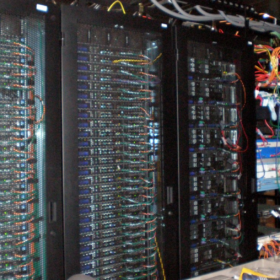
Deloitte urges India to align renewables with AI data growth
India can leverage its expanding renewable energy base to power AI-driven data center growth, but grid readiness, transmission upgrades and coordinated policy reform will be critical, according to a Deloitte Asia Pacific report.
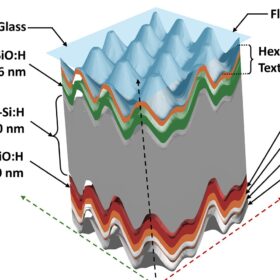
Honeycomb-shaped micro-structures enhance thin film silicon solar cells
TU Delft researchers developed a novel hexagonal microtextured glass that enhances light scattering up to 50%, improving optical performance in thin-film silicon solar cells. The technology shows promise for multijunction, flexible, and low-power solar applications.
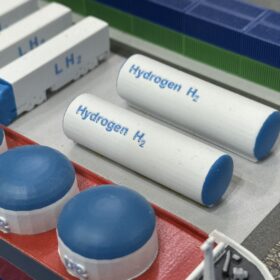
The Hydrogen Stream: Dutch agribusiness installs 1 MW electrolyzer
Dutch tulip nursery Rainbow Colors has completed the installation of a 1 MW solid oxide electrolyzer for on-site hydrogen production, while GlobalData says global low-carbon hydrogen capacity could reach up to 65.3 million tonnes per annum (mtpa) by 2030, driven largely by green hydrogen expansion in the Americas.
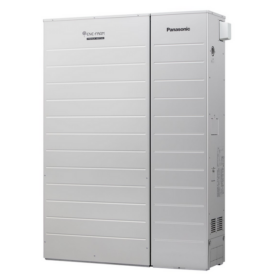
Panasonic debuts fuel cell cogeneration system for PV‑integrated homes
Panasonic has launched a new home fuel cell system for detached houses, designed to boost solar self-consumption through HEMS‑based smart scheduling. The unit generates electricity and heat from gas, supports demand response, and can supply emergency power during outages.
