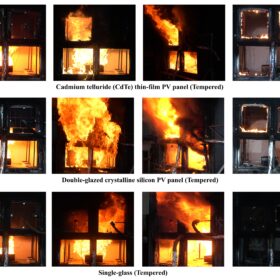
How BIPV façades behave under enclosure fire conditions
A group of scientists in China constructed a specialized compartment to test the thermal breakage and fallout of BIPV façades under enclosure fire conditions. They examined three different types of BIPV modules and found that tempered-glass PV panels exhibit superior thermal and mechanical resistance to breakage.

Daikin unveils ‘plumb-and-play’ residential heat pump
Daikin has launched the Altherma 3 H HT, a pre-engineered air-to-water heat pump using R-32 refrigerant, operating down to −28 C and delivering up to 70 C leaving water temperature for direct boiler replacement in existing radiator systems. The system reportedly achieves a coefficient of performance of 4.86.
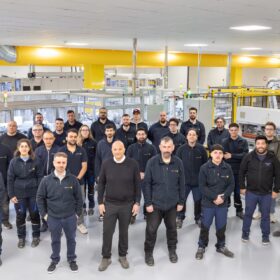
Inside PV Manufacturing: Midsummer’s CIGS factory in Italy
The Swedish thin-film solar specialist produces 50 MW of modules at its Bari facility, using its proprietary DUO system for cell manufacturing. The company says it sources all materials from the EU and other countries in the global North.

Tesla launches three-phase Powerwall 3P
The system integrates a battery, hybrid inverter, and home energy management system into a single device. It supports the integration of additional appliances, including heat pumps via SG-Ready interfaces. A connection to Tesla’s proprietary wallbox is also planned.
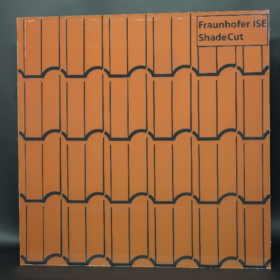
Fraunhofer ISE develops colored film tech for patterned solar modules
Scientists at Fraunhofer Institute for Solar Energy Systems ISE have created a film-based system that applies color patterns and cutouts to PV modules using the institute’s MorphoColor technology, enabling modules to imitate roof tiles, masonry, and facades with around 5% efficiency loss.

Zendure launches battery series for residential PV
Zendure is upping its to target the whole-home residential space, expanding on its plug-in balcony storage roots.

Thermoacoustic heat pumps on the verge of commercial breakthrough
Dutch startup BlueHeart Energy is testing its thermoacoustic heat pump engine in residential settings, with a limited European launch expected in spring 2027, followed by gradual scaling. The system uses sound waves instead of refrigerants, aiming for quiet, flexible, low-maintenance heating suited especially for retrofits and renewable integration.

Forecasting solar irradiance in urban environments with just one 360° image
U.S. scientists have developed a method to forecast solar irradiance at any location using a single high-resolution hemispherical image captured on-site. By extracting sky, sun, and surrounding scene information from visual cues, the approach enables accurate long-term energy prediction without relying on detailed 3D city models.

Multi-pyranometer tech improves solar irradiance measurements in the Arctic
Norwegian researchers have developed a multi-pyranometer method to more accurately estimate global tilted irradiance (GTI) in the Arctic by separating beam, diffuse, and reflected solar components. Validated in the world’s northermost settlement, the approach was found to outperform conventional models in high-latitude conditions and improve PV system design for extreme environments.

German utility deploying 30 MW heat pump for district heating
Enercity has begun constructing a 30 MW wastewater-based heat pump in Hanover as part of its shift away from coal-based district heating, replacing capacity from the Stöcken coal plant alongside biomass, power-to-heat, and waste-heat systems.
