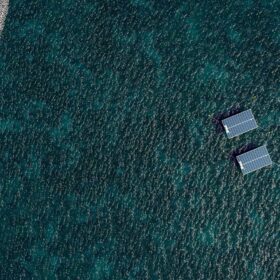
Naturgy, BlueNewables build 1 MW offshore solar plant in Spain
Naturgy and BlueNewables are developing a 1 MW floating solar installation off Spain’s Mediterranean coast, with two 500 kW units designed for open-sea operation and scheduled to begin testing in 2026.
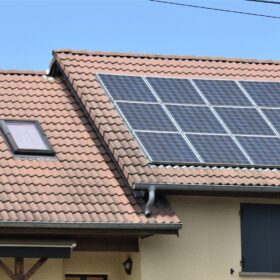
Community-based energy trading system for home solar-plus-storage
A research team led by Washington State University has developed a cloud-based system for trading and sharing energy from solar panels and batteries within a neighbourhood. The concept displayed potential energy cost savings of around 12% over a five-day test period.
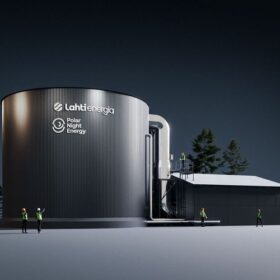
Finland’s Polar Night to build 250 MWh sand battery for district heating provider
Only months after inaugurating the world’s largest sand battery – a 1 MW/100 MWh thermal storage system – Polar Night has committed to building a project twice its size.

Perovskite solar cell based on Mxene achieves record-breaking efficiency of 25.75%
A research team in Spain has built what it claims to be the world’s most efficient perovskite solar cell using MXenes or any other type of 2D-materials. The device relies on a Mxene interlayer that suppresses non-radiative recombination and improved charge extraction at the interface between the perovskite absorber and the electron transport layer.

When solar meets next-gen nuclear
Scientists in China have proposed a novel scheduling framework for microgrids based on hybrid PV and a small modular nuclear reactors. The framework uses multi-objective distributionally robust optimization with a real-time reinforcement learning mechanism and is reportedly able to reduce operational costs by 18.7%.

Sharp offers space-qualified solar cells, plans perovskite-silicon tandem production
The Japanese technology company is offering three types of space-grade compound solar cell designs for satellites and spacecraft.

Capture price exposes true performance of solar plants
French solar engineering firm kiloWattsol says technical assessments show that capture-price analysis provides a more accurate measure of photovoltaic asset performance than France’s monthly M0 benchmark, as price volatility and negative wholesale prices increase.

Residential installations lead Dutch storage boom
The phasing out of net-metering for solar installations is incentivizing a growing number of citizens to install residential battery storage systems in the Netherlands. Analysts are predicting the upward trend will accelerate in the coming years.

Morocco signs deal for 30,000 MT polysilicon production plant
The Moroccan Ministry of Investment, Convergence and Evaluation of Public Policies has entered into an investment agreement for a polysilicon production plant set to have an annual production capacity of 30,000 tonnes.
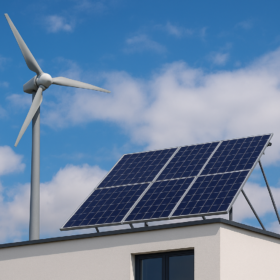
Wind-PV-powered heat pump for low-energy residential buildings
Scientists in China have developed an optimized energy management strategy for a wind-PV hybrid heat pump system that uses both thermal and electric energy storage. Using different seasonal interaction management strategies, they simulated four operational cases.
