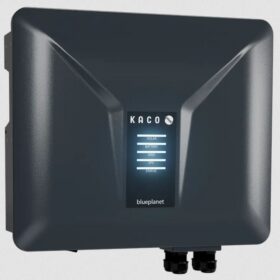
Kaco launches new hybrid inverters for residential applications
The German manufacturer unveiled a new line of hybrid inverters for applications ranging from residential rooftop arrays to projects on small commercial buildings. They have outputs between 6 kW and 12 kW, a maximum efficiency of 98.19%, and a maximum European efficiency of 96.55%.

Equipping transport trailer fleets with solar PV for fuel savings
Dutch solar PV systems integrator IM Efficiency has launched a complete solar PV system that includes battery and energy management system to power electrical systems on freight carrying trucks and transport trailers.
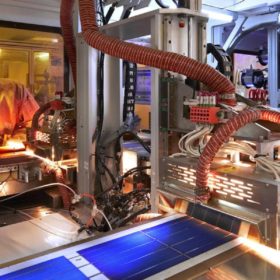
Trina Solar claims 25.9% efficiency for large-area industrial TOPCon solar cells
The Chinese manufacturer said the result was confirmed by Germany’s Institute for Solar Energy Research in Hamelin.

Research shows residential PV is becoming less attractive in Germany
Through a new methodology based on Decoupled Net Present Value (DNPV), a German research team has found that residential photovoltaic systems were not economically viable under most market conditions at the beginning of 2023. Although lower modules prices have significantly improved system profitability in recent months, several influencing factors that change over time may still have an impact on revenue.

Survey shows best fast MPPT techniques for PV
A group of scientists conducted a literature review of almost a hundred fast maximum power point tracking algorithms. They extracted ten representative algorithms and showed which of them works best under different scenarios.

German PV experts develop quality standard for solar modules
The new Solar Module Quality Standard is based on VDE SPEC 90038-1. It will guarantee that PV modules have been produced and tested according to uniform quality criteria.
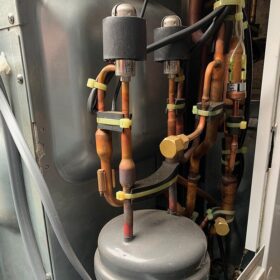
Climate data-based methodology for residential air-source heat pump sizing
A European research team proposed a new air-source heat pump sizing approach that utilizes long-term climate data and adjusts system operation based on actual local climate conditions. The sizing algorithm incorporates peak heat demand, unitary final energy demand, and seasonal heat demand across different house sizes.

Fraunhofer IMWS develops methodology for better lifetime predictions of inverters
The Fraunhofer Institute for Microstructure of Materials and Systems (Fraunhofer IMWS) has developed a methodology to improve lifetime predictions of inverters, to help manufacturers reduce material use and testing efforts while lowering production costs without compromising device lifespan.
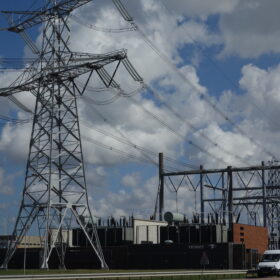
Dutch grid operators propose limitation contracts to free up 880 MW of capacity
Dutch grid operators TenneT, Enexis, Liander, and Stedin say that expanded use of “capacity limitation contracts” among renewable energy operators could free up about 880 MW of additional grid capacity. The contracts are granted by congestion service providers (CSPs), which act as intermediaries in the Netherlands.
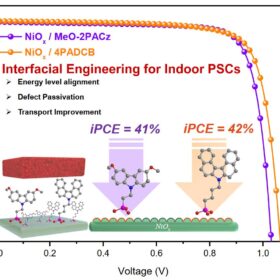
Indoor perovskite solar cell based on self-assembled monolayers achieves 42% efficiency
Researchers in Taiwan have developed an efficient carrier transport and defect passivation approach at the nickel oxide/perovskite interface in perovskite solar cells, enabling devices with 42% efficiency under indoor lighting conditions, and over 20% in simulated sunlight.
