
Perovskite solar beach umbrella and electric cooler
Anker has introduced an off-grid solar perovskite umbrella and a cooler with battery energy storage at CES 2025 in Las Vegas, Nevada.
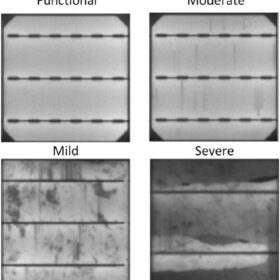
Ensemble deep learning for PV cell defect detection
Researchers have tested eight stand-alone deep learning methods for PV cell fault detection and have found that their accuracy was as high as 73%. All methods were trained and tested on the ELPV benchmark dataset, which includes 2,624 electroluminescence (EL) images of PV cells.

SolarEdge launches AI-based energy management system
The controller integrates selected third-party products into the SolarEdge EMS ecosystem by connecting to a household’s internet router via the local area network (LAN). It can communicate with inverters, electric vehicle chargers, heat pumps and SolarEdge’s servers.
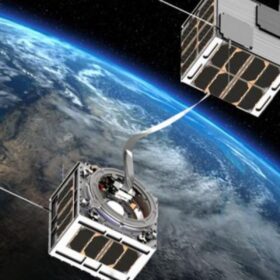
Perovskite-CIGS tandem solar cells powering electrodynamic tethers used in satellites
European researchers are developing miniaturized space propulsion technology that is propellant-free and based on electrodynamic tethers integrating perovskite-copper indium gallium diselenide (CIGS) tandem solar cells. It is meant to maneuver satellites in space or in de-orbiting without relying on heavy propellants on board.
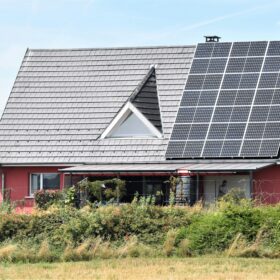
New rules allow VPPs to compete in Australia’s energy market from 2027
The Australian Energy Market Commission (AEMC) has released a final determination to allow virtual power plants (VPPs) to compete directly with large-scale generators in the energy market, scheduled to begin in 2027.
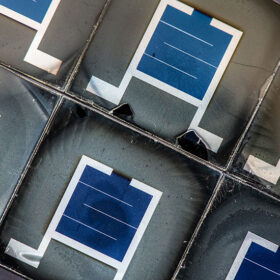
U.S.-made perovskite-silicon tandem solar modules could be produced at around $0.35/W
Techno-economic analysis conducted by NREL researchers has shown how perovskite-silicon tandem solar modules could currently hardly compete in cost with incumbent PV panels. Production costs for U.S.-made tandem products were found to range between $0.29/W and $0.42/W, with module efficiencies ranging from 25% to 30%.

Korean scientists build PV-powered supercapacitor with 35.5 Wh/kg energy density
Scientists in Korea have fabricated a solar-powered charging device that can reportedly achieve a power density of 2,555.6 W kg and an energy efficiency of 63%. The system uses nickel-based compounds to enhance the electrochemical performance of its electrodes.

UK-African consortium explores perovskite solar manufacturing potential in Africa
The UK’s University of Swansea is leading a consortium that aims to develop sustainable next-generation perovskite solar manufacturing in Nigeria, Rwanda, South Africa, and Kenya.

How to measure industry’s carbon footprint
The IEC has launched a new portfolio of carbon footprint verification services to help build trust and credibility in companies’ commitment to monitoring and reducing their emissions.
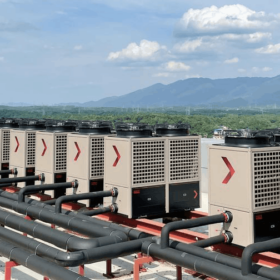
Phnix releases PV-ready heat pumps for commercial buildings
The Chinese manufacturer said the latest version of its Phnix HeatMaster heat pump series enables seamless integration with PV arrays. The systems have a coefficient of performance of up to 5 and can reach an outlet water temperature of 75 C.
