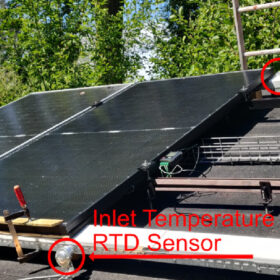
Air-based photovoltaic-thermal system can achieve significant energy savings in buildings
Researchers in Sweden have developed an air-based photovoltaic-thermal system that can preheat ventilation air and domestic hot water, cutting district heating demand by up to 16% for ventilation and 7% for hot water while also reducing peak heating loads in cold Nordic climates.
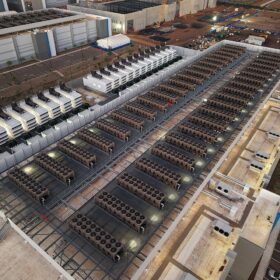
The limits to growth: The Malaysian way of navigating the data centre boom
Malaysia’s rising power demand, driven by industrial growth and data centers, is exposing grid and capacity constraints, prompting policies like Corporate Renewable Energy Supply Scheme (CRESS) to enable corporate renewable procurement while maintaining system cost recovery. A key factor is the System Access Charge (SAC), whose uncertain future trajectory affects long-term solar PPAs and investment decisions, making scenario-based modelling crucial for assessing project bankability.
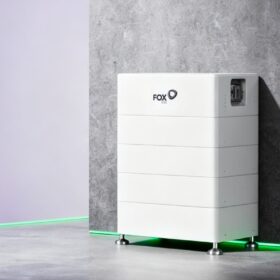
Energy Storage Inspection 2026: Fox ESS, SMA, SAX Power, Kostal and BYD impress with high efficiency
Twelve photovoltaic storage systems with capacities of 5 kW or 10 kW were included in the comparison, among them several new products, all of which achieved efficiency class A. A new study – also examining efficiency losses when storing electricity from the grid – highlights the importance of highly efficient battery storage. The researchers also took a closer look at the warranty conditions of the devices.

Chinese PV Industry Brief: Longi tops 800 MW Hexi solar module tender
Longi says it has ranked first in a recent 800 MW PV module tender in China’s Gansu province, while Canadian Solar says the first 2 GW phase of its US heterojunction (HJT) cell factory is set to begin pilot production in March or April.
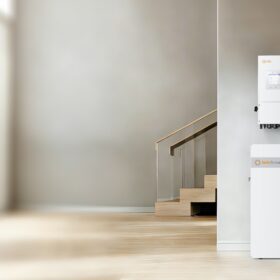
Solis launches new residential storage system portfolio
The Chinese manufacturer said its new three residential battery lines support a depth of discharge of 90% and deliver over 6,000 cycles.
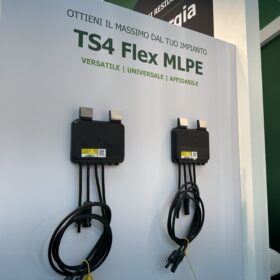
Tigo debuts 725 W optimizer for high-power solar modules
The new product has a maximum wattage of 725 W, a maximum current of 22 A, and a maximum efficiency of 99.6%.

BYD unveils EV batteries that can recharge in 10 minutes
The Chinese electric vehicle maker said the new batteries can charge from 10% to 70% in 5 minutes and from 10% to 97% in 9 minutes. The company also announced a new generation of its Flash Charging Technology.
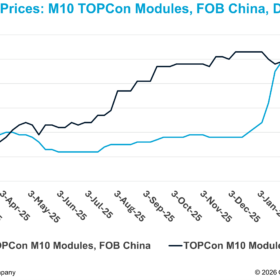
China TOPCon module prices edge higher as March cargoes clear
In a new weekly update for pv magazine, OPIS, a Dow Jones company, provides a quick look at the main price trends in the global PV industry.
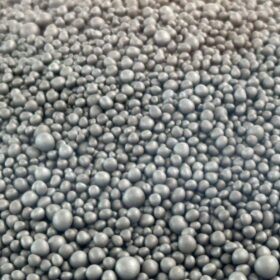
China’s polysilicon prices fall again amid 480,000 MT inventory buildup
Global solar supply chains face renewed price pressure as weak post-holiday demand in China collides with high polysilicon stockpiles, pushing wafer costs lower and weighing on exporters ahead of policy changes.
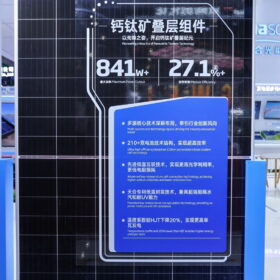
Guidelines to assess three-terminal, four-terminal tandem solar cell performance
Researchers in the U.S. have developed a set of guidelines and protocols to assess the performance of three-terminal (3-T) and four-terminal (4-T) tandem solar cells, including those with subcells made of III–V, CdTe, perovskites or silicon materials.
