
Optimal tilt angle for bifacial PV deployed on white-painted ground surfaces
Scientists in India have analyzed the performance of a bifacial PV module installed on a white-painted ground surface and have found a 30-degree tilt angle outperforms all other inclinations angles in terms of power output.
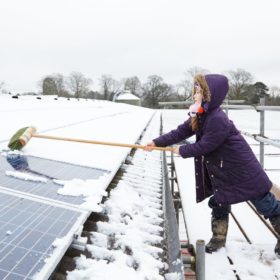
Octaspherosilicates-based anti-icing coating for PV systems
Developed by scientists in Poland, the new coating uses transparent silicone-epoxy modified with functionalized octaspherosilicates. The researchers have created five samples, each with a different combination of chemicals, and have found that ice adhesion was reduced by up to 43%, with freezing delay time growing by up to 70 times.

Fraunhofer ISE, TMU build ‘aquavoltaic’ system for microalgae production
The system can reportedly reduce electricity costs in aquaculture. It consists of an open raceway pond, a mechanical paddle wheel, a motor and power transmission system, a motor speed control circuit, a 100 W photovoltaic module, and 12-V battery with a capacity of 60 Ah, an inverter, and a 10-A charge controller.
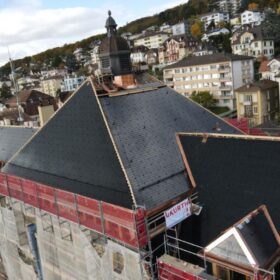
Freesuns brings PV to Swiss heritage buildings
Swiss module manufacturer Freesuns has installed 33,300 of its solar roof tiles on three historical buildings in the Swiss town of Neuchâtel.
Norwegian startup combines solar with EV recharging, energy management
Norway-based Evert said its new solution can simplify installing solar PV, energy management, and electric vehicle charging by combining multiple devices into one unit bundled with software. It is made for the European residential and commercial markets, and expected to be available in mid 2025.

Tornado rips through solar farm in Florida
Duke Energy’s Lake Placid Solar Power Plant experienced an EF-2 tornado during Hurricane Milton, shredding a swath of solar modules while leaving most of the facility intact.

Can Israeli PV tenders preserve competition in a concentrated market?
Researchers have studied Israel’s clearing price method for PV tenders and raised concerns about its potential for long-term dominance. They examined how power abuse and technological inefficiencies lead to market inefficiencies, concluding that a duopoly best suits the Israeli market.
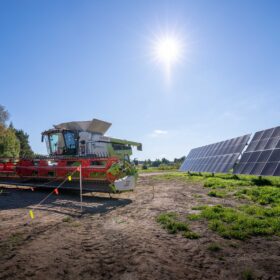
Sweden’s first large-scale agrivoltaic park inaugurated
Production is now underway at Sweden’s first large-scale agrivoltaics park, owned and operated by Svea Solar. A power purchase agreement is in place with a local vertical farmer for the electricity produced, while the farm underneath the solar panels will produce rapeseed, ley and wheat on a rotational basis.

Germany wraps up ‘innovative’ tender with average price of €0.0709/kWh
Germany has concluded a new renewables tender, securing 583 MW of capacity at an average price of €0.0709 ($0.0771)/kWh.
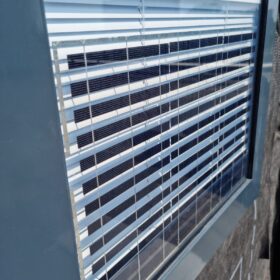
TNO researchers build world’s first bifacial PV window
The new multifunctional PV window concept aims to produce electricity while providing over-heating protection for better indoor thermal and visual comfort. It consists of an insulating glazing unit with bifacial crystalline silicon solar cells strips and embedded venetian blinds that act as reflectors for the rear side of the cells.
