
Canadian startup unveils AI tool for solar panel cleaning optimization
Swish Solar has an AI-driven tool that optimizes solar panel cleaning schedules to reduce soiling losses and operating costs. The platform uses data analytics and forecasting models to help operators time cleaning based on financial impact.
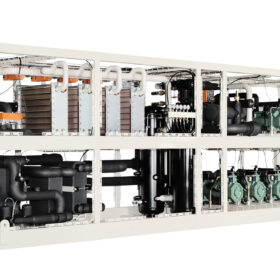
Advansor unveils scalable CO2 heat pump for large-scale heating needs
The Danish company said its configurable CO2 system delivers up to 4.8 MW per unit and is scalable to 50 MW for large industrial and commercial projects. The units offer hot water output of up to 95 C and compatibility with complex installations such as food processing, district heating, and commercial buildings.

Solar and the cyber winter
In an interview with pv magazine, cybersecurity expert Roberto Setola describes a structural shift in cyber threats against solar energy infrastructure, where attacks now target peripheral systems like remote terminal units rather than centralized SCADA, often in coordinated campaigns amplified by AI. He also emphasized that the recent cyberattack to PV plants in Poland demonstrated how simultaneous strikes on smaller, less-protected operators can potentially trigger major disruptions, including blackouts, economic losses, and cascading grid risks.

Sandia Labs benchmarks PV software providers in first ever blind comparison analysis
Sandia National Laboratories conducted the first-ever blind comparison of seven commercial PV modeling software, revealing that differences in weather handling, system modeling, derates, and assumptions grow as system complexity increases. The study emphasizes that software choice should consider project complexity, workflow, and modeling features rather than relying on rankings alone.
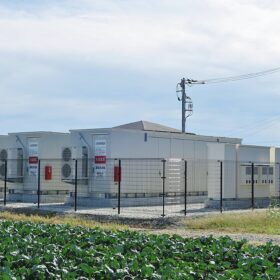
Panasonic claims world’s first trial of cybersecurity monitoring for grid-scale BESS
A Japanese joint-pilot will test grid-scale BESS with a range of local and remote attack vectors, with cybersecurity monitoring to watch for indications of anomalies.
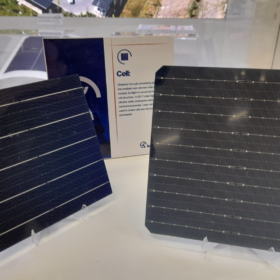
Spanish researchers develop ultra-thin solar cells for any surface
The Silicon and New Concepts for Solar Cells (SyNC) research group at the Institute of Solar Energy (IES) of the Polytechnic University of Madrid (UPM) has produced high-efficiency two-dimensional solar cell prototypes using the “hot-pick-up” technique, with simulations suggesting the cells could meet up to 30% of a building’s energy needs when applied to facades.
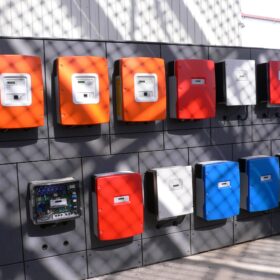
New PV inverter efficiency metric reflects local solar conditions
Researchers in Brazil have developed a weighted PV inverter efficiency methodology that accounts for country-specific solar irradiance and operating conditions. The approach is designed to address the limitations of international metrics by incorporating variables such as input voltage and maximum power point tracking (MPPT) performance.

What happens when malware hits PV systems
A random malware variant affected about 800 remote monitoring devices at ground-mounted PV plants in Japan in May 2024. Tokyo-based cybersecurity firm Girasol Energy has told pv magazine what happened and how PV asset owners can protect themselves against such incidents.
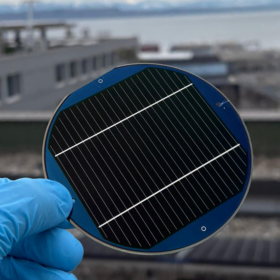
EPFL, CSEM achieve world record efficiency of 30.02% in perovskite-silicon triple-junction solar cell
An international research team boosted triple-junction solar cell performance by enhancing perovskite crystal growth, increasing middle-cell light absorption, and adding reflective nanoparticles.
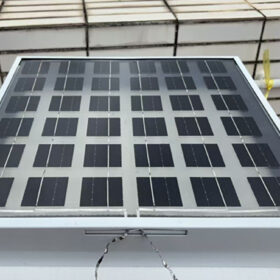
Thermochromic bifacial PV glazing system for reducing building cooling loads
Researchers in Hong Kong Hong Kong fabricated a thermochromic bifacial photovoltaic glazing system prototype that passively regulates solar heat gain while harvesting energy from both sides. Experiments and simulations showed it significantly reduces cooling loads and indoor temperatures while boosting electricity generation.
