
Using end-of-life photovoltaic panels as building material
Scientists in India have proposed to use solar modules at the end of their lifecycle as a building material for low-cost small housing units. With solar module recycling currently not viable economically, the researchers said their approach makes conventional solar panels into BIPV products without any modifications.

Radiation-hardened solar blankets to power orbital logistics vehicle
Solestial says its ultra-thin solar cells will power in-space delivery vehicles for Atomos Space.
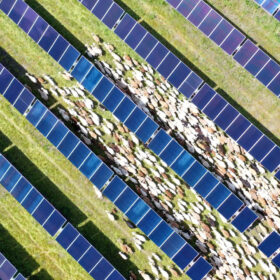
The economics of solar grazing
Researchers at the University of Illinois have conducted a survey, combined with prior research, outlining solar grazers’ investments and earnings. The report also delves into complex grazing business plans on large utility-scale solar facilities.
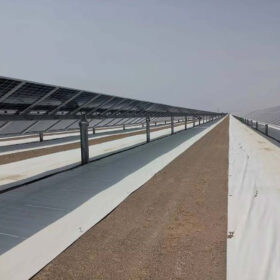
PVC knife-scratch coated fabric to increase albedo, energy yield in bifacial PV
China-based Halead is offering a reflective material for ground-mounted bifacial PV projects, which it claims can increase the annual power production of a solar plant by over 9%. Germany’s TÜV SÜD certified the performance of the solution.
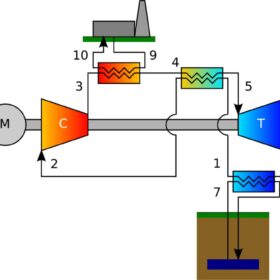
Preheating hydrogen with heat pumps may reduce cost of green H2 for heating by 10%
UK researchers suggested utilizing heat pumps to preheat hydrogen to very high temperatures, which they said could reduce the need for hydrogen by more than 20%. The process is also claimed to have the potential to reduce the European industry’s energy demand by approximately 200 TWh per year.

Australian startup builds production line for thermal energy storage blocks
Australia-based MGA Thermal has secured AUD 8.25 million ($5.39 million) from domestic and international investors as it gears up for commercial-scale production of its thermal long-duration energy storage solution.

Energy Vault completes 25 MW/100 MWh gravity-based storage facility in China
Energy Vault has started commissioning a 25 MW/100 MWh energy storage facility adjacent to a wind power facility near Shanghai.

Carbon-cement supercapacitors for bulk energy storage
The Massachusetts Institute of Technology (MIT) has developed a scalable bulk energy storage solution with inexpensive, abundant precursors – cement, water, and carbon black. Their supercapacitors have high storage capacity, high-rate charge-discharge capabilities, and structural strength.
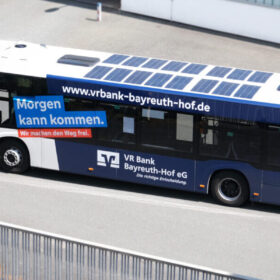
Sono Motors equips first bus with PV retrofit solution
Sono Motors has equipped its first bus with its PV retrofit solution, featuring 16 semi-flexible rooftop solar modules to feed 1.4 kW of output into the vehicle’s battery system.

New technique to recover lead in end-of-life solar panels
A research group in the United States has developed a process to recover lead in its metallic form so that it can be reused in the PV industry. The process relies on a leaching solution based on a combination of acetic acid (CH3COOH) and hydrogen peroxide (H2O2), which the researchers said leaches the lead ‘in a matter of minutes.’
