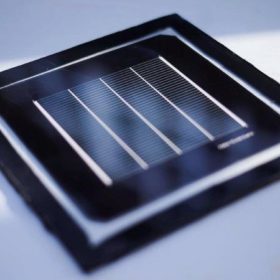
Meyer Burger to commercialize 29.6%-efficient perovskite tandem solar cells
Meyer Burger is working with several research institutes in Switzerland and Germany to integrate perovskite tandem technology into its manufacturing processes.
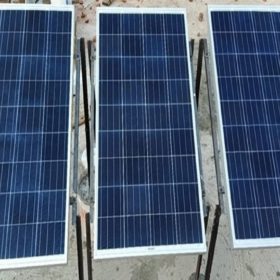
Hydrophobic nanocoating to reduce soiling in solar panels
Scientists in Egypt have created a self-cleaning, hydrophobic coating for solar panels that reportedly increases their efficiency by more than 30%. They used a coating solution based on polydimethylsiloxane (PDMS) and silicon dioxide (SiO2) nanocomposites, mixed with ethanol and isopropanol.
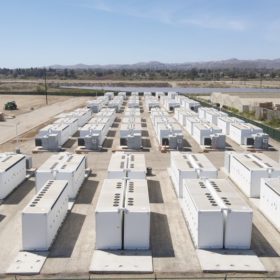
US organizations publish manual on energy storage safety
The International Code Council and the Interstate Renewable Energy Council (IREC) have published a new handbook on installation codes, hardware standards, and lithium-ion risk-mitigation tools.

Solar Inventions gets patent for silver-saving configurable current solar cells
Solar Inventions has patented technology that could save between $2 million and $5 million per gigawatt in solar projects, while also raising rated power output. The company has patents in the United States, China and Israel for its cell configuration.
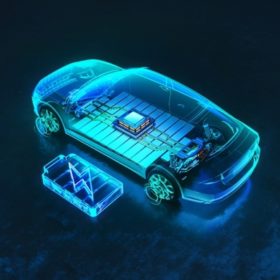
The mobility rEVolution: High-capacity electrode material for solid-state batteries
GoodWe has released a new solar-powered smart EV charger for residential use, Envision AESC has broken ground on a 12 GWh battery plant in the United Kingdom. and PG&E has invited customers to pre-enroll in its three upcoming vehicle-to-everything (V2X) pilot programs.
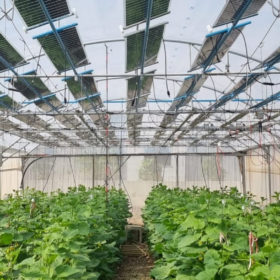
Novel agrivoltaic array tech for greenhouses
An Israeli startup is commercializing crop-responsive PV trackers for greenhouses. The system includes a tracking structure, a motor, a controller, and specially designed solar panels.
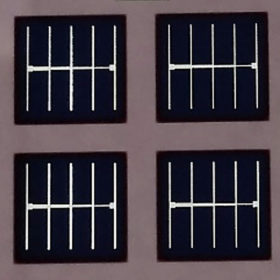
Heterojunction germanium solar cell with 8.6% efficiency
Japanese scientists have developed a heterojunction germanium solar cell with the biggest area ever achieved for the tech. It has an open-circuit voltage of 291 mV, a short-circuit current of 45.0 mA/cm2, and a fill factor of 0.656.
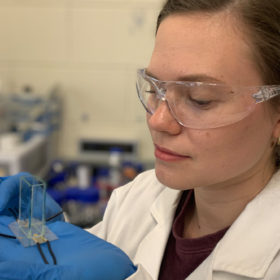
Australian researchers use sound waves to expand green hydrogen
Researchers from RMIT University and the University of Melbourne claim that high-frequency vibrations can release 14 times more hydrogen than standard electrolysis techniques. The discovery has ramifications for the expensive, rare materials currently used in electrolyzers.

EU’s first hydrogen pipeline to connect Portugal, Spain, France
The leaders of Spain, Portugal and France have unveiled the H2Med energy interconnection project, which will supply Europe with hydrogen. H2Med, formerly known as BarMar, will be the first green corridor to connect the Iberian Peninsula with the rest of Europe. It will be operational in 2030.

Aqueous organic flow battery for renewables storage
The Chinese Academy of Sciences has fabricated a kilowatt-scale aqueous redox flow battery with a capacity of 80 mA cm-2 over 500 cycles. The researchers claim that it is a promising candidate for large-scale energy storage.
