
The Hydrogen Stream: Germany to import green ammonia from Saudi Arabia from 2026
Germany has decided to build its first green ammonia import terminal in Hamburg, in collaboration with Air Products. Egypt, meanwhile, has signed $85 billion of hydrogen framework agreements.

China Brief: SNEC postponed to May
SNEC, the world’s biggest solar event, has been postponed for the third time this year. Yingfa Group, meanwhile, inaugurated a 20 GW cell factory in Sichuan province and GCL Tech said it plans to produce raw materials for EV batteries.
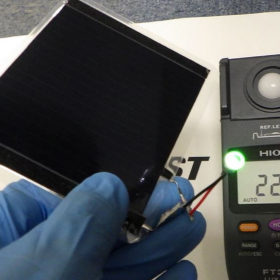
Roadmap to achieve CIGS solar modules with efficiencies above 20%
Japanese scientists have described the steps that need to be taken to improve the average efficiency of CIGS solar modules, from around 18.5% at present to more than 20%. They presented all of the critical technical factors that are currently holding the tech back from broader market adoption.
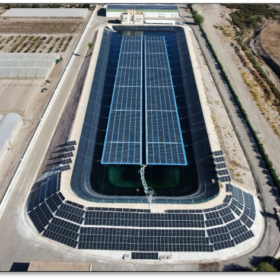
Floating PV for water pumping, desalination
An irrigation community has built a 786 kW floating solar array on a small water reservoir in Murcia, Spain. The facility will provide power for a solar water pumping system, a desalination unit, and the community itself.

Proposed HVDC ‘macrogrid’ to transmit low-cost, renewable power in US
A grid-modeling company has proposed an underground high-voltage DC transmission overlay for the continental United States. It could potentially help to reduce climate pollutants and electricity costs, in addition to facilitating solar and wind deployment.

Is hydrogen about to have its solar moment?
As Longi and other solar manufacturers kick off massive growth in hydrogen generation capacity, expect large price decreases resulting from steep learning curves, echoing the rapid advances experienced by the solar power industry since the 1970s.
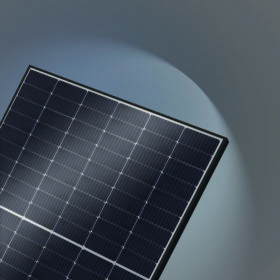
Winaico unveils new 410 W solar modules
Winaico’s new PV modules are based on monocrystalline half-cells and a 10-busbar design, with a power conversion efficiency of 21.0%.

Taiwanese consortium develops easily recyclable solar module
The Industrial Technology Research Institute (ITRI) and United Renewable Energy (URE) have developed a solar panel that can be easily dismantled to simplify the recycling process. They claim that 96% of the materials in the panel can be recovered, including all of the solar cells and front glass.

1Komma5° to enter solar module business with full-black TOPCon product
Germany’s 1Komma5° says it will exclusively use polysilicon from Europe or the United States to make the TOPcon solar cells for its full-black modules. It is aiming for market launch in the second quarter of 2023.

Zucchetti unveils 5 kWh high-voltage battery for three-phase storage applications
Zucchetti’s new battery features a nominal capacity of 5.12 kWh and a nominal voltage of 400 V. It says it is suitable for C&I and residential PV systems.
