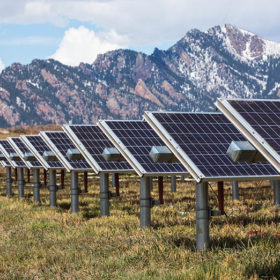
Cooling down solar modules by increasing space between panel rows
A US research team claims to have demonstrated that increasing the spacing of solar panels between rows improves PV system efficiency and economics by allowing airflow to cool down the modules. The method could improve a project’s LCOE by as much as 2.15% in certain climates.
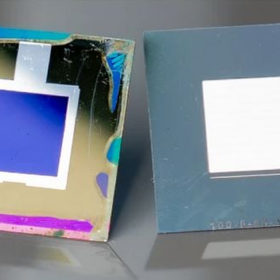
Tandem perovskite-silicon solar cell with 29.80% efficiency via periodic nanotextures
Researchers from Germany have designed a tandem perovskite silicon PV cell that reportedly has lower reflection losses and improved open-circuit voltage. They demonstrated a device with submicrometre-periodic nanotextures and an improved back-reflector design.
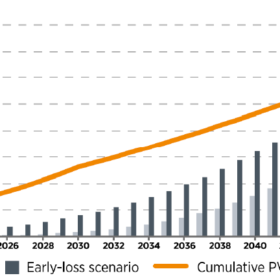
New process to recycle Si-PV modules
A team of researchers from the University of New South Wales (UNSW) has proposed a novel cost-effective way to recycle silicon solar panels. Their process consists of module deframing, laminate shredding and material concentration using electrostatic separation, reducing their original weight by 2% to 3%.

Algae could boost solar panel efficiency by 4%
A Swedish team has inaugurated a pilot facility to mass produce algae material that can potentially boost silicon solar module efficiency by 4% and thin film by 36%. The algae are added to the encapsulant in silicon-based modules or to the anti-reflective coating on the glass of thin film modules. The team estimates the resulting modules would be 3.9% cheaper.

Space-based solar power for terrestrial energy needs
The Cassiopeia solar project aims to use the sunlight collected by a space satellite for terrestrial energy needs. The electricity generated would be converted to radio frequency microwave radiation transmitted to an antenna on Earth. The initial LCOE would be €48 ($47.8)/MWh, according to a UK study.
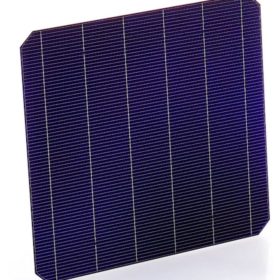
CEA-INES reduces silver consumption in M2 heterojunction solar cell
The French research institute said it was able to reduce the width of the metallization lines of the photovoltaic cells without affecting the efficiency.
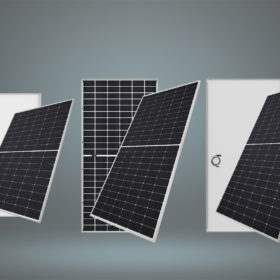
Sharp raises power output of three half-cut solar modules
The IEC/EN61215 and IEC/EN61730-certified panels are all updated versions of existing products. The manufacturer raised the ouput of each by 5 W.

BIPV solar facade on high-rise building to produce 58 MWh annually
The 25-meter building facade building with 120 solar modules uses SolarEdge optimizers to overcome shading from neighboring buildings.
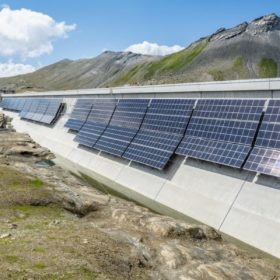
Alpine vs. urban solar
A group of Swiss researchers has shown that optimized alpine PV installations could offer revenues that are on average 20% higher than those of standard, urban, installations. Furthermore, they found that the Swiss Alps have the potential to host about 1 GW of solar capacity offering revenues 33% higher.
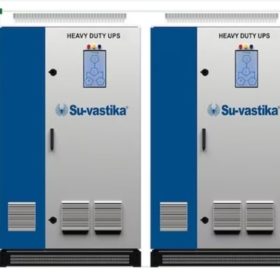
Indian startup launches solar-linkable UPS system for residential, commercial applications
Su-vastika introduced a three-phase uninterruptible power supply (UPS) system with power ratings of 10 kVA to 500 kVA. The backup time provided by the system can be extended by using solar power in conjunction with the battery bank.
