
Australian agency on track with ‘world-first’ grid connections simulator
The Australian Energy Market Operator (AEMO) said it plans to launch a connections simulator this year after completing pilot tests for an online tool designed to accelerate the evaluation and approval process for new clean energy grid connections.

World’s largest single-phase battery goes online in California
Axium Infrastructure and Canadian Solar have developed a 350 MW/1400 MWh energy storage system in California.
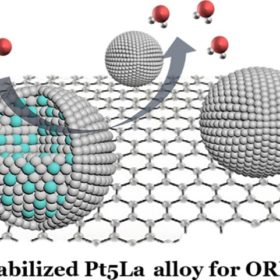
The Hydrogen Stream: Ultra-stable platinum-lanthanum for more efficient fuel cells
Tsinghua University researchers have developed a way to combine high-cost platinum and a rare earth element, lanthanum, to serve as a catalyst in fuel cells. Meanwhile, SSAB, LKAB, and Vattenfall have revealed plans to launch industrial production of hydrogen direct reduced sponge iron (H-DRI) by the end of this decade.
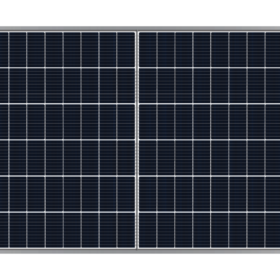
RenewSys unveils 590 W bifacial solar module
India’s RenewSys has released its DESERV Extreme series of bifacial PV modules, with front-side power outputs ranging from 565 W to 590 W. The modules are built with half-cut, monocrystalline PERC cells.
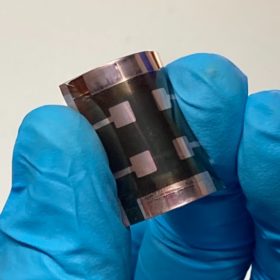
Flexible all-perovskite tandem solar cell with 23.8% efficiency, improved voltage
A Chinese-Swiss research group claims to have overcome two major challenges for the development of flexible all-perovskite tandem solar cells – voltage losses and the deposition process for the cell’s functional layers. They built a device with a high open-circuit voltage of 2.1 V.

GoodWe unveils high-voltage hybrid inverter for C&I applications
GoodWe’s new hybrid inverters have efficiency ratings of 98.0% and European efficiency ratings of 97.5 %. They are available in five versions, with power outputs ranging from 15 kW to 30 kW.
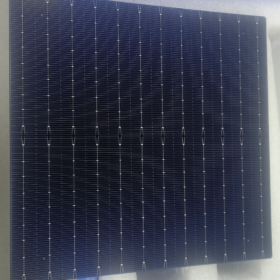
TOPCon solar cell achieves 24.2% efficiency via new plasma-assisted atomic layer deposition tech
A team of international researchers has simplified the deposition of thin film layers in the commercial production of TOPCon solar cells. Via a tube-type industrial plasma-assisted atomic layer deposition (PEALD) technique, they were able to achieve a power conversion efficiency of 22.8% in a 60-cell, 613 W TOPCon module.

Solar Calculator estimates residential solar potential
SolarReviews provides customized solar savings and design estimates for homeowners in just a few clicks, with no utility bills, paywalls, or registration required.
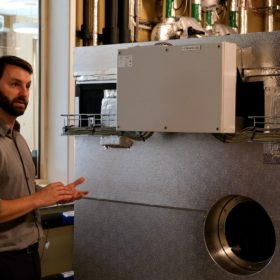
PCM-based thermal battery to store solar power via heat pump
Norway’s SINTEF has designed a heat storage system based on phase change materials (PCM) that can support PV generation and peak shaving. The battery’s container hosts 3 tons of liquid biowax based on vegetable oil and is now beating performance expectations at a pilot facility.
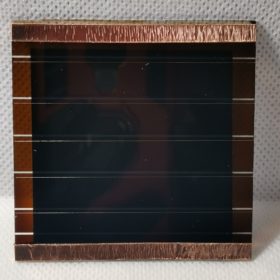
Greatcell achieves 32% efficiency for inorganic perovskite solar cell
Australian manufacturer Greatcell has built a cell with roll-to-roll coating technology. It designed it without a hole transport layer (HTL) and used carbon composite back contacts, which offer excellent electrical conductivity.
