The Hydrogen Stream: Carbon-coated nickel anode to solve problems of hydrogen fuel cell without precious metals
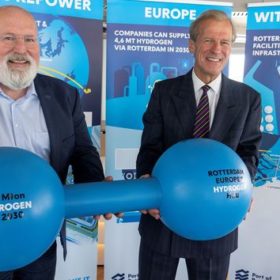
A team of researchers from the University of Wisconsin-Madison, Cornell University, and Wuhan University have presented a completely precious metal–free alkaline fuel cell with enhanced performance using a carbon-coated nickel anode. Meanwhile, the Port of Rotterdam has offered to supply northwestern Europe with 4.6 million tonnes of hydrogen by 2030. According to RMI, Europe will import green hydrogen between 2024 and 2030. RenewableUK sees room for hydrogen exports from the UK to the EU.
Smarter E Products: Trina Solar showcases G12 solar modules for rooftop applications
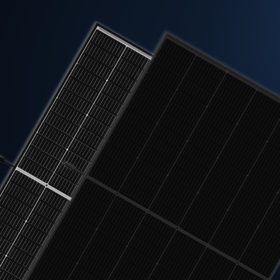
All the products rely on the company’s 210 rectangular silicon wafer (G12R) cell technology. The manufacturer claims these new products can increase the installed capacity of residential roofs by 5-7%. The largest panel is a 21.5%-efficient device with a power output of up to 580 W and the smallest features an efficiency of up to 21.3% and a nominal power of up to 425 W.
Smarter E Products: JinkoSolar unveils residential battery
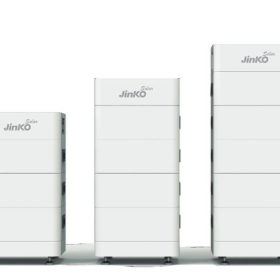
The lithium iron phosphate battery is sold with a storage capacity ranging between 7.1 kWh and 21.31 kWh, a voltage of 192 V to 576 V, and a nominal capacity of 37 Ah.
Intersolar Europe Day 3: Until next year!
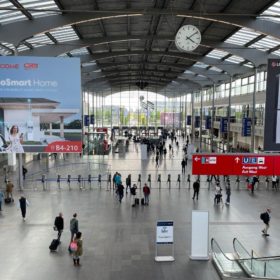
Follow pv magazine live for the final day of Intersolar Europe 2022 to make sure you stay abreast of the latest news, analysis, techs and trends.
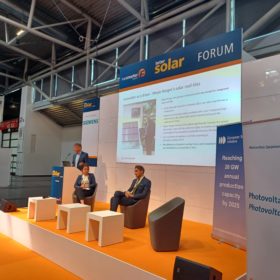
Meyer Burger CEO Gunter Erfurt talks solar tiles at Intersolar
Meyer Burger CEO Gunter Erfurt spoke with pv magazine at Intersolar 2022 about its paXos-designed solar tile technology, and why the Swiss company won’t make the same mistakes as Tesla when it comes to the European market.
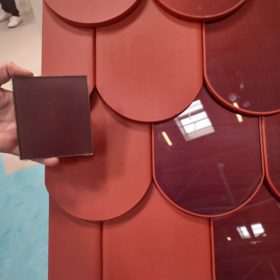
Terracotta solar tiles for historical buildings
Germany’s paXos, whose solar roof tiles were bought by Meyer Burger and unveiled last year, has shown off its new “Beaver Tail” terracotta solar tiles at Intersolar 2022.
Trailblazer tipped to accelerate Australia’s clean energy transition
The University of New South Wales and the University of Newcastle have revealed plans to join forces to develop and commercialize “world-leading” technology in solar, renewable hydrogen, storage and green metals.

Schneider Electric set to acquire AutoGrid
Schneider Electric and AutoGrid are partners on a fully integrated distribution management system and a distributed energy resources management system (DERMS).
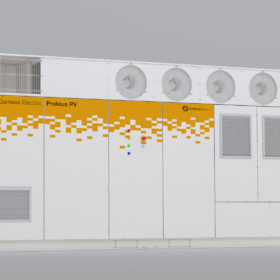
Smarter E Products: Gamesa Electric presents new central PV inverter
Gamesa Electric’s new Proteus PV inverter represents an upgrade over the previous Gamesa Electric 3X series. It has an output of up to 4,700 kVA and is compatible with DC/ESS interfaces for the connection of storage energy systems.
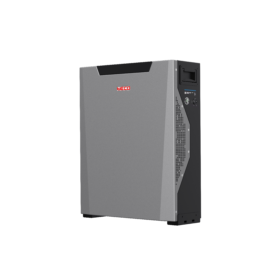
Smarter E Products: Stackable dual-voltage battery from Weco
Weco’s new 5.3 kWh battery can be used as a wall solution or in a stackable configuration. Up to 15 modules can be stacked without additional components, thanks to a special casing.
