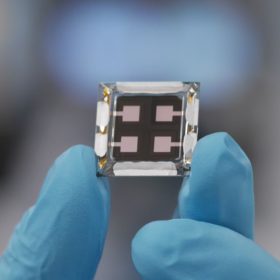
Four-year outdoor testing shows perovskite solar cells suffer from high seasonality
Testing conducted by the Helmholtz-Zentrum Berlin (HZB) in Germany has shown that perovskite solar cells operating at high latitudes in Europe may suffer from higher performance losses in winter compared to conventional PV devices. The scientists warned, however, that at lower latitudes this seasonality may be less pronounced.

NREL, CubicPV achieves 24% efficiency for perovskite mini solar module
A U.S.-based collaboration between the National Renewable Energy Laboratory (NREL) and CubicPV has yielded a perovskite minimodule with certified efficiency of 24.0%. The two noted that it is the first time a U.S. effort has set a record in the perovskite mini module category.

Superdielectrics unveils Faraday 2 battery as a polymer-based alternative to Li-ion
Superdielectrics launches the Faraday 2 battery, advancing a water-based, metal-free approach to home storage, from a UK-based facility.
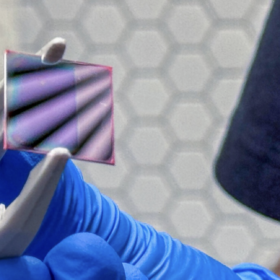
Researchers discover method to significantly extend quantum battery lifespan
Researchers at the Royal Melbourne Institute of Technology (RMIT University) and Australia’s Commonwealth Scientific and Industrial Research Organisation (CSIRO) have developed a way to extend the lifetime of Dicke quantum batteries by up to 1,000 times, while maintaining their fast-charging properties enabled by superradiance.

New PV system sizing approach based on jellyfish search algorithm
Researchers have used the jellyfish search algorithm to optimize solar PV distributed generation placement and sizing. They have tested the algorithm on an IEEE 33-bus system, with one, two, or three PV deployment scenarios, and compared its performance with that of a dozen of competing optimization techniques.
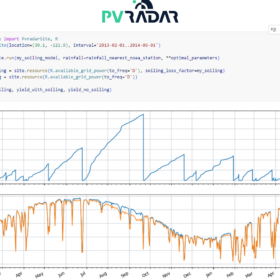
PVRadar launches Python programming tool to ease site-specific loss modeling
German software company PVRadar Labs has released a Python programming package for solar asset owners and engineers that want to build site-specific models.

The Hydrogen Stream: eCap Marine to supply fuel cells for marine vessels
eCap Marine says it will supply 8 MW of hydrogen fuel cell systems for four zero-emission vessels under construction for Norway’s Møre Sjø and logistics firm Samskip, with deliveries expected in 2027.

First Solar to use quantum dots to boost module efficiency
Quantum dot technology promises to boost bifacial solar module output. The company entered into a supply agreement with specialist UbiQD.

Netherlands increasing vigilance on solar inverter-related cybersecurity risks
The Dutch government said it remains vigilant on potential cybersecurity threats coming from solar inverters. It minimized, however, the risk of hidden hardware components in inverters and said these devices would be “easily detectable” by the Dutch authorities.
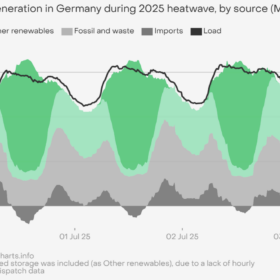
Record EU solar generation helped stabilize power supply during heatwave
A record 45 TWh of solar power was generated across the European Union in June, which helped stabilize electricity supply during the recent heatwave, according to think tank Ember.
