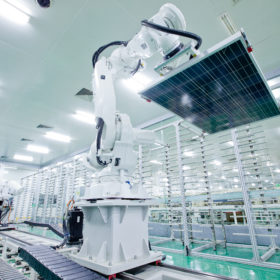
JinkoSolar claims 24.9% efficiency for n-type monocrystalline cell
The result was confirmed by Germany’s Institute for Solar Energy Research (ISFH).
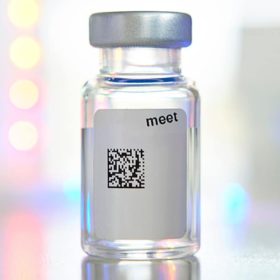
Zinc-air batteries with non-alkaline, aqueous electrolytes
New battery chemistry developed in Germany promises to make zinc-air batteries the storage technology of the future.

The geopolitical impact of hydrogen
In an interview with pv magazine, Indra Overland, head of the Center for Energy Research at the Norwegian Institute for International Affairs, explains how international hydrogen strategies may play out in the upcoming decades. Plans and roadmaps will not be enough to turn a hydrogen economy into reality and its success will depend on becoming cost-competitive vis-à-vis other solutions in several areas, he says.

Stanford scientists gain insight on polaron distortion in perovskite solar cells
Polaron formation in perovskite solar cells has been indicated in scientific research as a possible factor for making this kind of cell particularly efficient, although the mechanism behind polarons’ action is completely unknown. A U.S. research group has now observed how polaron distortions form and grow.

Sustainable pumped-hydro across 616,818 sites
Australian researchers have identified more than 600,000 sites suitable for closed-loop pumped-hydro energy storage projects across the globe. “Off-river” pumped-hydro is not only able to overcome the typical topographical issues of conventional pumped-hydro but is also cheaper.

Agrivoltaics prevail in France’s tender for innovative PV technologies
The French energy regulator has allocated 146.2 MW in the procurement exercise. The final average price was €0.0815/kWh.

Enhancing electron transfer kinetics crucial for viability of redox flow batteries
Scientists in the United States claim that further research is needed to gain a deeper understanding of kinetic stabilization strategies to increase cell voltage in redox flow batteries and bring them closer to commercial viability.
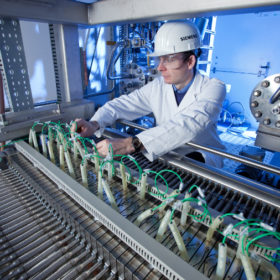
PV trends of 2020: Part 5
Despite much of the world being on lockdown for a big chunk of 2020, there are few who could say it has been an uneventful year. And while the ongoing Covid-19 pandemic will be what defines 2020 for many, in the solar industry there’s plenty more to shout about, from the rapid rollout of high-powered modules to a drastic increase in carbon-neutral pledges from companies and governments around the world. Across five installments, pv magazine takes a look back at the year in solar. First up were the U.S. election and carbon neutral pledges, followed by auctions and green bonds. Part 3 focused on big modules and renewable grid support, while part 4 looked at high-efficiency EU cell production and perovskites. In the final installment, you can read about smart homes and green hydrogen.
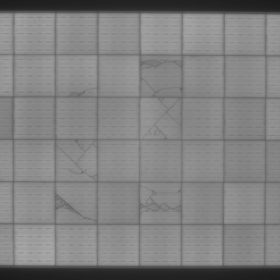
Looking into the cracks
A white paper published earlier in December by PV Evolution Labs investigates the formation of performance damaging cracks in PV cells, based on mechanical stress testing of more than 40 commercially available PV modules. While the lab warns that susceptibility to cracking will change according to the specific bill of materials making up each module, certain technologies are shown to perform better than others.
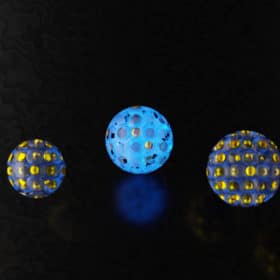
The ideal size for a quantum dot
Scientists in Australia have developed an algorithm to calculate the perfect size and density for a quantum dot as a light sensitizer in a solar cell. The research could lead to both higher efficiencies for quantum dot solar cells, and the design of quantum dots compatible with other cell materials, including crystalline silicon.
