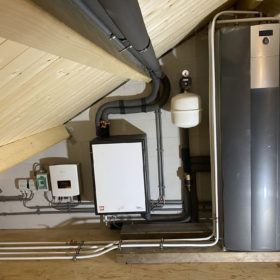
Photovoltaic-thermal district heating networks are feasible
A group of scientists and companies in the Netherlands has tested a PVT heating concept in a green district and has found that the proposed design, which is also based on underground storage and the use of heat pumps, is technically and economically feasible.

A closer look at perovskite degradation
Scientists in Japan put perovskite solar cells under the microscope, aiming to observe at the molecular level the degradation mechanisms that can occur during operation. Their findings offer an improved understanding of performance loss in perovskite thin films, as well as several pathways towards mitigation.
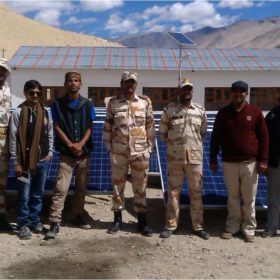
Solar power providing heat for Indo-Tibetan border outposts
Indo-Tibetan Border Police outposts along India’s border with China are using MicroSun solar panels to generate electricity for heating purposes, among other applications.
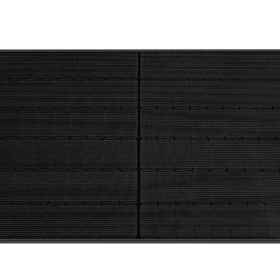
Panasonic launches module series compatible with its Evervolt battery
Available in four different products, the series features a conversion efficiency of 20-21.2%. Two of the panels are packaged in a sleek, all-black aesthetic.

Offshore floating PV may reach maturity in 2030
According to a report from DNV GL, the North Sea may host around 100 MW of floating solar capacity by 2030, and 500 MW by 2035. The LCOE of offshore PV systems is currently estimated at around €354/MWh but in the future it should be close to that of ground-mounted solar parks.

Solar facade for 3D-printed concrete house
Taiwan-based Heliartec has deployed a solar facade on a 3D-printed concrete house in Belgium. It said it installed the solar facade with the “circular construction” philosophy in mind.
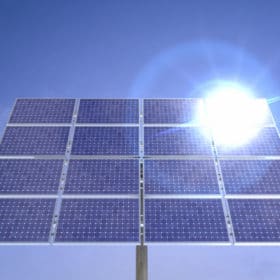
Cooling PV panels with shallow geothermal energy
Iraqi researchers have demonstrated the technical and economical feasibility of using shallow geothermal energy to cool PV systems. They tested two different techniques – a closed-loop system and an open-cycle system – to reduce power losses from 30% to up to 4.1%.
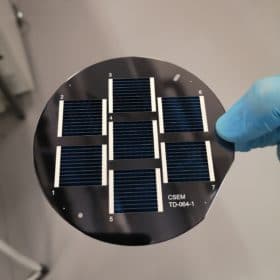
A 26.5% efficient perovskite-silicon tandem cell
Scientists in Switzerland achieved 26.5% efficiency on a perovskite-silicon tandem cell measuring 4cm² and relying on industry-standard screen-printed metallization, further demonstrating the technology’s potential for large-scale production and low-cost electricity generation.

QuantumScape records breakthrough performance for solid-state batteries
QuantumScape reported performance results this week for its solid-state batteries and their potential impact on the electric vehicle industry.
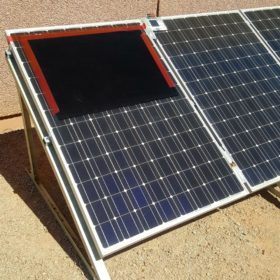
US scientists apply Suns-VoC method to outdoor PV tests
Researchers in Arizona have used the Suns-VoC characterization method for indoor solar cell testing to monitor PV installations. The method can also be used with outdoor distributed-generation and large-scale solar arrays.
