
Simultaneous optimization of plant design and control unlocks cost-competitive green hydrogen
Achieving cost-competitiveness for green hydrogen produced via water electrolysis using intermittent renewable energy sources remains a significant challenge. Researchers from LUT University in Finland have shown that considerable cost reductions can be achieved by simultaneously optimizing plant control and design, based on specific hydrogen demand targets and local weather conditions.

Evert launches wallbox with bidirectional EV charger, PV inverter
Evert has unveiled technical and availability details of its new power management unit, a wallbox that integrates a 22 kW bidirectional DC electric vehicle charger, a 20 kW PV inverter, and a home energy management system. The Norwegian startup targets residential users seeking integrated EV and solar energy solutions.
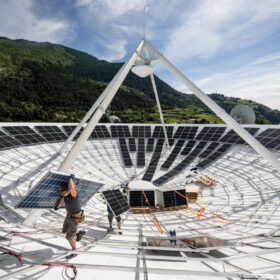
Repurposing unused satellite dishes into solar systems
Switzerland-based utility CKW has installed PV systems on disused satellite dishes at telecom company Leuk TDC’s headquarters, using SolarEdge’s DC-optimized inverters and power optimizers to maximize system output.
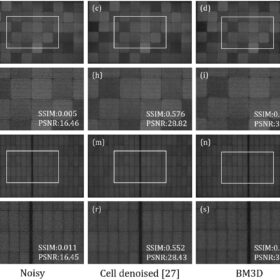
Denoising outdoor electroluminescence images of PV panels through deep learning
Researchers in Australia have developed a simplified residual network-based architecture method to filter out noise from electroluminescence images of PV modules. The proposed technique reportedly enhance the accuracy and efficiency of automated inspection systems for utility-scale PV plants.
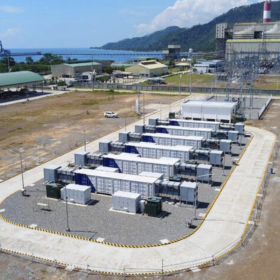
India offers $631.5 million to support 30 GWh of battery storage
The Indian government has announced viability gap funding (VGF) of INR 54 billion ($631.5 million) to support 30 GWh of battery energy storage systems (BESS), allocating capacity among 15 states and the state-owned power producer NTPC. The scheme provides INR 1.8 million/MWh and requires projects to be commissioned within 18 months through competitive bidding.
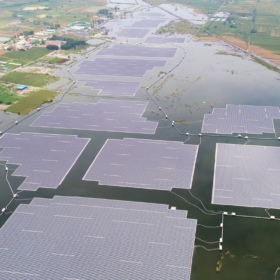
Water-based photovoltaics reach global capacity of 21.18 GW
An international research team has developed an index-based remote sensing method to see trends in the global development of water-based PV. It has found that China currently accounts for 80% of the global total deployed capacity.

Cost optimization and competitiveness in green hydrogen: Critical factors and determining variables
Through a rigorous approach, with more than 4,000 simulations and a detailed analysis of each scenario, Enertis Applus+ offers a roadmap for understanding where, how, and under what conditions green hydrogen can be produced at competitive costs.
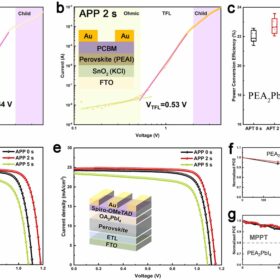
Perovskite solar cell built through Argon plasma treatment achieves 23.55% efficiency
Researchers in China have used an argon plasma polishing pre-treatment (APP) to remove surface defects and increase passivation effectiveness in perovskite solar cells. The result is a perovskite device with a 2D interface that significantly improves stability and performance.
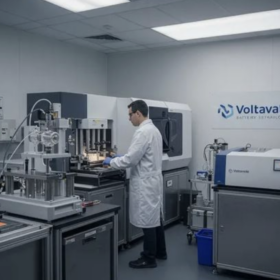
Voltavate raises funds to advance battery separator tech
Australian battery tech startup Voltavate has secured AUD 850,000 ($535,000) in an oversubscribed pre-seed funding round led by global investment firm Artesian.

Hail risk remains top issue faced by solar projects
Hail damage remains a top risk to large-scale solar assets, according to an annual report from kWh Analytics.
