
China’s SNEC 2025 show highlights PV industry resilience, storage growth
Chinese solar manufacturers showed resilience at the 2025 SNEC PV Power Expo in Shanghai despite a deepening supply glut, as strong demand for energy storage and emerging technologies offset a steep drop in new PV module launches. Tunnel oxide passivated contact (TOPCon) stayed dominant, while back-contact, perovskite, and lithium iron phosphate (LFP) storage solutions gained traction.

Optimizing endless PV-driven heat pump scenarios for costs, self-sufficiency
Researchers have used mixed-integer linear programming-based multi-objective optimization to optimize 30,912 unique scenarios showing heat pumps operating in combination with PV power. The optimization modeling was conducted under day-ahead spot market prices terms.
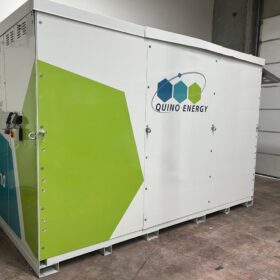
How organic flow batteries could erase the need for critical-mineral dependency
Vanadium flow and lithium-ion batteries both require materials described as critical by the US Department of Energy (DOE).

Longi unveils 700 W back-contact PV panel with world record silicon solar cell
Chinese solar manufacturer Longi unveiled a new PV module with 25.9% efficiency at the 2025 SNEC trade show this week in Shanghai, produced using both low- and high-temperature passivation techniques.

Novel MPPT technique uses fuzzy logic control with new inputs
Academics have developed a maximum power point tracking (MPPT) algorithm for PV systems that combines incremental conductance with fuzzy logic control. The inputs used are the sum of conductance and incremental conductance and its rate of change. It had an average efficiency of 97.7%.
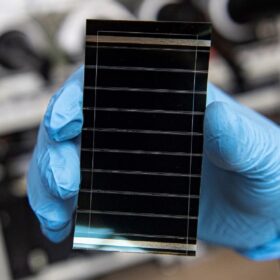
Perovskite solar cell based on chalcogen-molecules achieves 25.37% efficiency
An international research team has used Lewis molecules to improve efficiency and stability of a perovskite solar cell built with a fully encapsulated trapping tactic aimed to reduce perovskite surface defects. The cell achieved a certified power conversion efficiency of 25.18% and a champion efficiency of 25.37%.
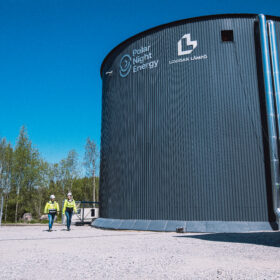
World’s largest 1 MW/100 MWh sand battery commissioned in Finland
Finnish startup Polar Night Energy has commissioned the world’s largest sand battery in Pornainen, southern Finland. The industrial-scale system delivers 1 MW of thermal power with 100 MWh storage capacity, covering up to a month’s summer heat demand and nearly a week’s winter demand for the local district heating network.

Simultaneous optimization of plant design and control unlocks cost-competitive green hydrogen
Achieving cost-competitiveness for green hydrogen produced via water electrolysis using intermittent renewable energy sources remains a significant challenge. Researchers from LUT University in Finland have shown that considerable cost reductions can be achieved by simultaneously optimizing plant control and design, based on specific hydrogen demand targets and local weather conditions.
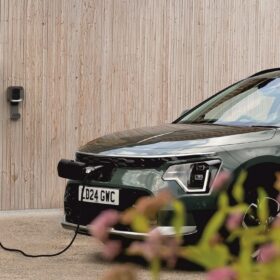
Evert launches wallbox with bidirectional EV charger, PV inverter
Evert has unveiled technical and availability details of its new power management unit, a wallbox that integrates a 22 kW bidirectional DC electric vehicle charger, a 20 kW PV inverter, and a home energy management system. The Norwegian startup targets residential users seeking integrated EV and solar energy solutions.
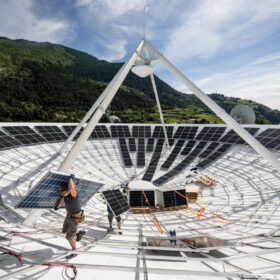
Repurposing unused satellite dishes into solar systems
Switzerland-based utility CKW has installed PV systems on disused satellite dishes at telecom company Leuk TDC’s headquarters, using SolarEdge’s DC-optimized inverters and power optimizers to maximize system output.
