
Solar leads Ireland’s home energy upgrade grant scheme in 2026
Ireland recorded more than 10,000 applications for solar PV as part of its home energy upgrade program from January to March 2026, an increase of 65% on the same period for last year.

German utility deploying 30 MW heat pump for district heating
Enercity has begun constructing a 30 MW wastewater-based heat pump in Hanover as part of its shift away from coal-based district heating, replacing capacity from the Stöcken coal plant alongside biomass, power-to-heat, and waste-heat systems.

Peru opens complementary services market to support renewables
Peru’s energy ministry has proposed market-based reforms for complementary electricity services to improve grid stability amid rising solar and wind generation.
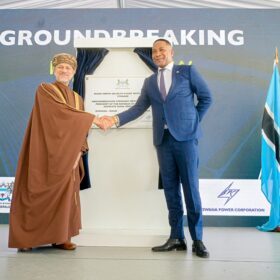
Botswana breaks ground on 500 MW solar-plus-storage project
The Maun solar project will encompass 500 MW of solar tied to 500 MWh of battery storage in northeastern Botswana, making it one of the largest projects of its kind in southern Africa. A 30-year power purchase agreement is in place between project developers Okavango Solar, wholly-owned by Oman’s NAQAA Sustainable Energy LLC, and Botswana Power Corporation.
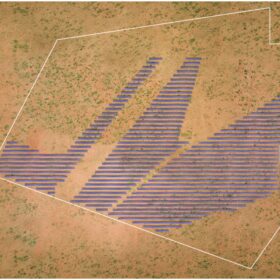
Work begins on Zambia’s largest solar-plus-storage project
Globeleq has started construction on 250 MW solar farm connected to 150 MW/600 MWh of battery storage in Zambia’s Lusaka Province.
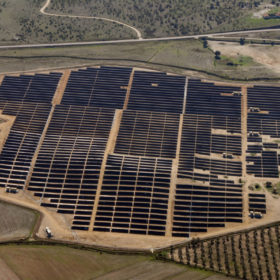
PV curtailment exceeds 3.8% in Spain over past nine months
Spain’s PV curtailment currently averages 3.83% but varies widely by region, driven by grid constraints, system security needs, and market oversupply.
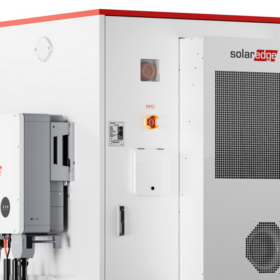
SolarEdge targets C&I with new all-in-one battery
SolarEdge has a new commercial focused battery system, with the new model scaling up to as high as 1 MW / 4 MWh depending on the inverter choice.

Repowering key for Japanese solar assets approaching feed-in tariff expiry
The refinancing of GSSG Solar and Voltaiyo’s 104 MW Jupiter Portfolio comes as Japan’s first-generation feed-in tariff (FIT) projects approach the end of guaranteed rates, forcing owners to reassess revenue strategies in a shifting post-FIT market.
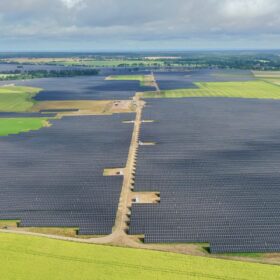
First PV plant operating in Poland’s balancing market
The 204 MW Zwartowo solar power plant is the first large-scale solar project authorized to provide balancing services in Poland.
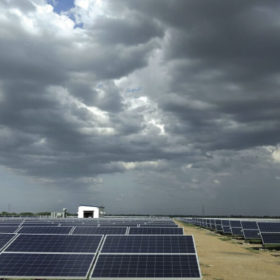
Abaxx Exchange lists world’s first solar irradiance futures contract
The Enwex Germany Solar (GSM) contract, launching April 23, brings exchange-cleared solar irradiance hedging to a market that has until now operated largely over the counter (OTC), a development Munich Re’s weather derivatives team says could broaden participation and formalize risk management.
