
Solar inverters can detect cyberattacks but no one sees the signal
A King Abdullah University of Science and Technology (KAUST) researcher whose lab has demonstrated up to 100% accuracy using a single hardware counter tells pv magazine that firmware-level detection of inverter attacks is technically viable – but today’s communication standards do not transmit the firmware‑integrity signal to operators.

US utility signs 4 GW solar, storage buildout deal
Salt River Project and NextEra Energy Resources have signed a power purchase agreement for 3,000 MW of solar and 1,000 MW of battery storage to be built in Arizona through 2027.
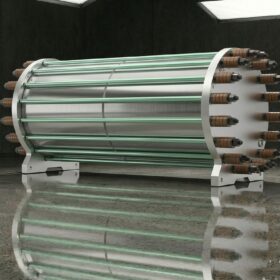
The Hydrogen Stream: AfDB backs projects, Europe logs 265 offers
The African Development Bank (AfDB) has launched a hydrogen funding call for African projects, while the European Commission has registered 265 supply opportunities under its Hydrogen Mechanism.

Chinese PV Industry Brief: Longi, Trina Solar report losses
Longi says its 2025 revenue and losses declined year on year, while Trina Solar reports deeper full-year losses and margin pressure across its core module business.

Submarine link to connect island solar to South Korea’s grid
Taihan Cable & Solution says it has secured a contract to supply and install 154 kV submarine cables linking island‑based PV arrays and floating solar sites to the South Korean grid, in its first fully integrated project with its marine installation subsidiary.

People, purpose and systems thinking: The leadership layer of the energy transition
Women in Solar+ Europe highlights this week the insights shared by industry leaders during the panel “Impact Leadership in Solar & Storage: securing the energy transition through people, purpose and systems thinking,” organised by the leadership ecosystem Solar+ Leaders at Solar & Storage Live London. Bringing together voices from across the value chain, the discussion explored how leadership is evolving in response to growing system complexity, skills gaps, and the need for greater alignment across the industry.

Myanmar commissions two 40 MW solar plants in Mandalay region
The government of Myanmar has opened two 40 MW solar power plants in Mandalay region, adding approximately 202 million kWh of annual generation capacity as the country faces ongoing grid constraints and power rationing.
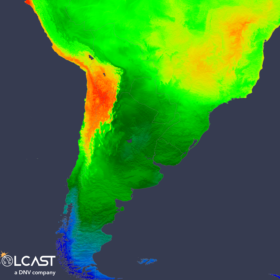
April ENSO shift lifts northern coastal irradiance while suppressing Brazil and northern Argentina
In a new weekly update for pv magazine, Solcast, a DNV company, reports that April 2026 brought mixed solar irradiance conditions across South America, with above-average GHI along Colombia’s Pacific and Caribbean coasts and parts of southern Argentina, while eastern and northern temperate regions — including Buenos Aires to Bolivia — saw reduced irradiance due to persistent cloud cover and wetter-than-average conditions.

TotalEnergies, Nextnorth close financing for 440 MW Philippines solar
TotalEnergies and Philippines-based developer Nextnorth have started construction of a 440 MWp solar plant in Isabela province after reaching financial close on $300 million of international bank financing.
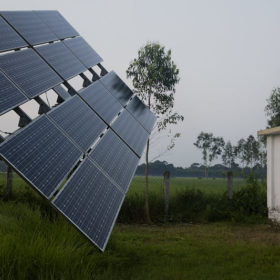
Bangladesh’s PV capacity to reach 8.5 GW by 2035, says GlobalData
Bangladesh’s solar capacity is forecast to increase more than sixfold over the next decade, driven by a shift from off-grid rural deployment toward grid-connected and distributed generation, according to a new GlobalData report.
