
Interspace single-axis agrivoltaics has lowest environmental impact in Europe
A group of scientists has simulated fixed vertical, interspace and overhead single-axis as well as overhead dual-axis agrivoltaic systems for 30 years and has found interspace single-axis system emerged as the most environmentally favorable configuration in Europe.

Aluminum-doped zinc oxide glass coating for shielded space solar PV modules
South Korean researchers developed a process that allows the use of aluminum-doped zinc oxide film in radiation-shielding quartz glass. A demonstration in III-V solar photovoltaic space modules showed it significantly enhanced shielding effect of bare quartz glass.

‘We’re taught to only apply for roles when we can tick every box’
This week Women in Solar+ Europe gives voice to Gemma Buckley, Chief Legal Officer at UK-based Solarport. She says that one of the most persistent barriers wome are witnessing is how they are socialised. “Research shows men apply for promotion or a new role when they’re 60% qualified; women wait until they’re 100% qualified. I’ve watched this play out throughout my career,” she states.

Extreme cold weather preparedness for renewable energy facilities
The devastating impact of Winter Storm Uri in February 2021 fundamentally transformed how the electric power industry approaches cold weather preparedness, exposing critical Bulk Electric System vulnerabilities and catalyzing sweeping regulatory changes, including new mandatory NERC standards, that renewable energy facilities must now navigate.
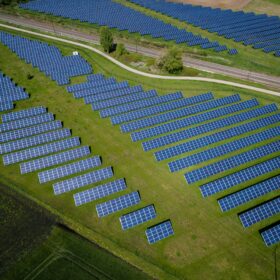
Italy assigns 1.1 GW in PV auction open to projects with ‘non-Chinese’ modules
The procurement exercise, the second solar auction under Italy’s Fer X incentive scheme and first to exclude the use of Chinese solar modules, cells and inverters for projects above 1 MW in size, concluded with a final average price of €0.06637/kWh.

Türkiye publishes rules for floating solar
Türkiye has published a regulatory framework covering the legal basis for developing floating solar plants on reservoirs and dams. The rules establish where floating solar can and cannot be built and how projects can be approved.

India’s solar PLI scheme draws strong interest but faces implementation
A new JMK Research and Institute for Energy Economics and Financial Analysis (IEEFA) study says India’s solar production-linked incentive (PLI) scheme is spurring upstream manufacturing but remains constrained by policy gaps, capital intensity and volatile global supply chains.
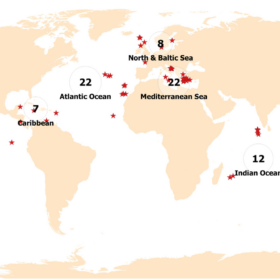
Small islands, big impact: the role of solar PV for the tropics
Low-cost renewables provide an opportunity for tropical islands to drive a sustainable, secure and self-sufficient economy. Solar PV emerges as the bulk energy provider, driven by excellent resource conditions and fast-improving economic attractiveness. The anticipated momentum of solar PV in tropical islands can best be characterised as a Solar-to-X Economy.
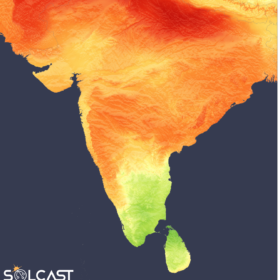
Solar surge in Northern India as Cyclone Ditwah cuts irradiance in the south and Sri Lanka
In a new weekly update for pv magazine, Solcast, a DNV company, reports that November brought above-average solar conditions in northern India and Pakistan, while southeastern India and Sri Lanka faced reduced solar output due to Cyclone Ditwah’s storms and heavy cloud cover. Despite southern disruptions, India’s renewable energy share rose, driven by strong solar generation in the north and overall growth in renewable capacity.
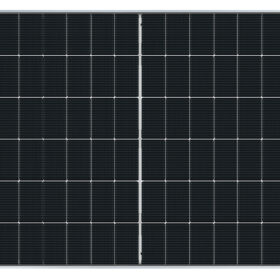
Astronergy launches 750 W anti-dust TOPCon solar module
The Chinese manufacturer said its new Astro 7 TOPCon module features an innovative self-cleaning frame and a power conversion efficiency of 23.2%.
