
California’s home batteries are replacing gas plants and saving hundreds of millions
Brattle Group analyzed a gigawatt-hour virtual power plant test that may be the world’s largest as part of its review of California’s distributed peak-shaving program.
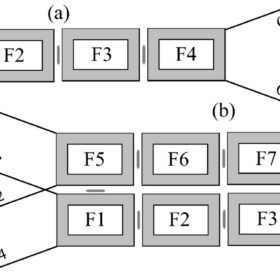
Floating PV system with ring-like floater geometry
Scientists in China have investigated the hydrodynamic performance of a novel modular floating photovoltaic system. They did so using a novel hybrid approach, which integrates viscous-flow effects from computational fluid dynamics into a potential-flow solver. They analyzed the new system with varying numbers of panels, either in a single chain or a parallel configuration.
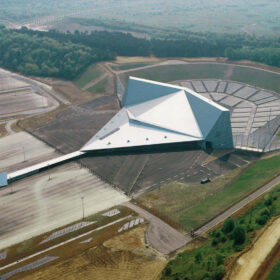
French city favors domestic modules in 6.8 MW solar carport tender
The city of Grand Nancy, France, awarded a 6.8 MW solar carport tender to Holosolis, tying the 2027 project to its planned 5 GW factory in the Grand Est region.

Can BESS answer US data center power demand?
Data centers’ energy demand is well-documented. Hyperscale AI data centers owned by big-tech companies are placing acute strain on energy infrastructure in the United States, the global data center capital, and many more are expected to come online. There is ongoing debate about how policymakers, grid operators, regulators and the energy industry – renewable or otherwise – can respond to the situation. Battery energy storage systems (BESS) can provide grid-balancing solutions, but not all are convinced they can fully replace gas.

Researchers identify main source of wide-bandgap solar perovskite degradation
Scientists in Belgium have investigated how perovskite absorbers used in solar cell degrade under three different stress test types and have found that the interface between the perovskite layer and the electron transport layer suffers from weak thermomechanical stability, which creates the conditions for performance losses.
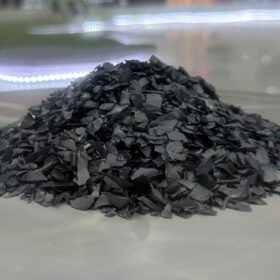
GCL to raise $450 million for China polysilicon consolidation plan
GCL plans to raise $450 million to aid consolidation in China’s polysilicon sector and support the shift from tunnel oxide passivated contact (TOPCon) to back-contact solar products.

Saudi Arabia launches 3.1 GW solar tender
Saudi Power Procurement Co. (SPPC) has announced a request for qualification (RFQ) for 3.1 GW of solar capacity across four projects in the seventh round of Saudi Arabia’s renewable energy tender program.

German solar PPA deals drop 87% as developers turn to battery hybrids
With German solar power purchase agreements (PPAs) down 87%, a panel of experts argued that hybrid solar-plus-storage projects are now the only bankable path forward.

Australian team develops graphene supercapacitor
Researchers at Monash University in Australia have developed a new carbon-based material they claim allows supercapacitors to store as much energy as traditional lead-acid batteries, while delivering power much faster than conventional batteries can manage.

Chinese Academy of Sciences developing thermoacoustic heat pump for industrial applications
The researchers developed a heat-driven thermoacoustic heat pump that can purportedly achieve a temperature lift of 125 C. It uses a thermoacoustic heat pump to stably release the heat from the engine unit. The system also includes a thermoacoustic engine unit and acoustic resonators.
