
Cyprus launches PV, battery funding scheme as Greece turns to gas
Cyprus has launched a new scheme to fund installations of PV arrays and battery systems, with a specific focus on owners of electric vehicles. Greece, meanwhile, has devised a subsidy scheme to support the use of gas for conventional cars.
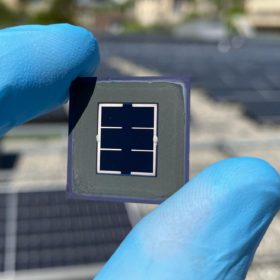
EPFL achieves 29.2% efficiency for tandem solar cell with fully textured silicon
Scientists in Switzerland made significant progress with an approach to perovskite-silicon tandem cell design that they say could eventually be integrated into existing silicon PV manufacturing. They have announced the achievement of a 29.2% cell efficiency – not far from the overall record for tandem cells, and verified by Germany’s Fraunhofer ISE.
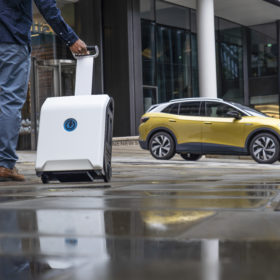
The mobility rEVolution: Portable EV charging stations for personal and shared use
In other news, BYD’s quarterly profit is up by 241% buoyed by demand for battery-powered cars, Ford takes a US$3.1 billion loss on its Rivian stake and cuts 580 jobs as part of corporate restructuring, and ABB agrees to provide its full portfolio of EV charging technology to Shell.
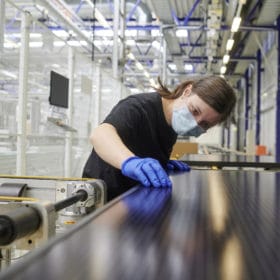
Meyer Burger to increase module, cell capacity in Germany
Swiss PV module manufacturer Meyer Burger has decided to achieve its capacity expansion targets by focusing on its German factories, in reaction to ongoing global logistics problems and supply chain issues.
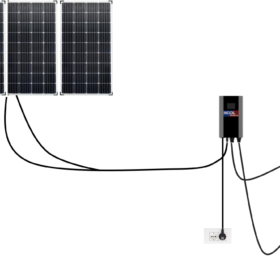
New PV water heater from Germany
German startup Nexol has developed a photovoltaic water heating system that relies on a smart controller, with either DC and AC power. It decides autonomously if grid electricity or PV is used, with the latter always preferred.
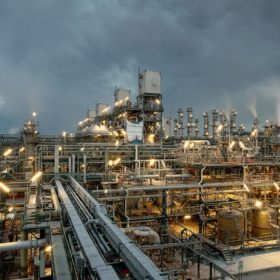
OCI secures $1.2 billion polysilicon order from Hanwha Solutions
OCI will supply polysilicon from its manufacturing facility in Malaysia, which is expected to have an annual capacity of 35,000 metric tons by the end of June.

Energy Vault, NTPC sign deal for gravity-based energy storage
Switzerland’s Energy Vault will support Indian state-run power producer NTPC by deploying its gravity-based energy storage technology and software solutions.
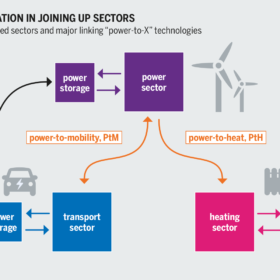
Techno-economic analysis of renewables-driven power-to-X processes
Researchers at the University of Genoa have conducted a techno-economic analysis to assess green hydrogen produced via water electrolysis and its conversion into three alternative fuels – methane, methanol, and ammonia. They looked into efficiency, storage capacity, annual costs, and production costs of the different fuels, which they found to be significantly higher than market reference values.

Pin-probe bar for busbar-free solar cell production
Japan’s Kopel has developed a device with a thickness of just 1.2 mm, with contacts on all of the finger electrodes of busbar-less solar cells.
Solar panel glut causing messy ‘false economy’ in Australia
Global solar supply chain issues and the Chinese energy crisis, which hit in the second half of last year, have ironically led to a “massive” oversupply of solar panels in Australia, according to major distributors. The tension between higher global panel costs and the glut of them within Australia has led to some messy pricing and strange market dynamics on the ground.
