
Anker Solix launches C1000 Gen 2, billed as world’s fastest charging station
Anker Solix’s C1000 Gen 2 portable power station delivers 2,000 W (AC) output from a 1,024 Wh battery and can fully recharge in 49 minutes using HyperFlash technology.

Advantage of back-contact solar modules in shading scenarios is limited to specific conditions, study finds
Researchers from Trina Solar and China’s Nanchang University claim to have verified that back-contact solar modules outperform TOPCon modules only when fewer than three cells in a substring are shaded. Their findings were published in a peer-reviewed scientific paper.
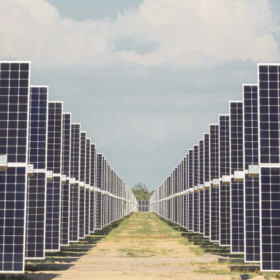
Waaree reviews terms in $95 million Enel Green Power India acquisition
Waaree Energies says its planned acquisition of Enel Green Power India is still under discussion, with some commercial terms under review, rejecting media reports that the deal is collapsing.
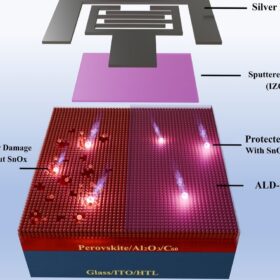
Indian scientists build near-infrared transparent inverted perovskite solar cell with 16.5% efficiency
The team produced a 16.53% inverted 1.08 cm2 perovskite solar cell using atomic layer deposition to apply a buffering layer of tin oxide to prevent electrode sputtering damage.
Australia launches fund to expand battery manufacturing
The Australian Renewable Energy Agency has launched a AUD 500 million ($324 million) initiative aimed at supercharging Australia’s battery manufacturing industry and seizing opportunities associated with the global renewable energy transition.

Austria allocates €12 million for solar-plus-storage rebates
The Austrian government had budgeted €12 million ($14 million) for a second funding round but wants to finance successful applications and bring 220 MW new solar and 200 MWh of storage online.

USDA announces it will discontinue funding solar projects
The U.S. Department of Agriculture has awarded billions in Rural Energy for America Program (REAP) grants for solar projects. Secretary Brook Rollins said the agency will no longer deploy funds to solar and wind projects.
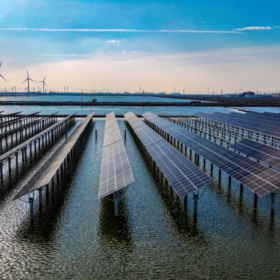
Jinko edges past Longi in first-half solar shipments as TOPCon dominates
InfoLink Consulting says global module shipments rose 10% to 247.9 GW in the first half of 2025, with JinkoSolar narrowly pushing past Longi and tunnel oxide passivated contact (TOPCon) tech accounting for more than 94% of the total.

SolMicrogrid to buy near-complete US solar, microgrid projects
SolMicrogrid has launched an energy-as-a-service (EaaS) program to acquire near-complete solar and microgrid projects, offering developers upfront capital while providing commercial and industrial customers with long-term discounted renewable power without ownership costs.

German researchers develop recycling for dry-processed Li-ion batteries
Researchers at the University of Münster have developed a mechanical recycling process for production scrap from the dry processing of lithium-ion batteries. The method operates without solvents, preserves material properties, and allows the recycled cathode powder to be directly reused in electrode manufacturing.
