
France to support BIPV solar tiles with additional incentives
Barbara Pompili, the French minister of ecological transition, recently announced new bonus incentives for BIPV projects during a visit to a Sunstyle factory that aims to produce 1 GW of “Made in France” solar tiles by 2025.
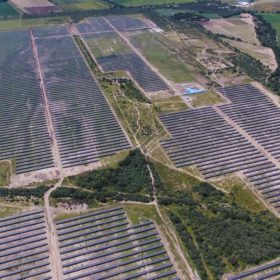
X-Elio to build PPA-linked 200 MW solar park in Australia
The Spanish solar EPC specialist has announced a “landmark” power purchase agreement for the 200 MW Blue Grass solar project in Queensland, Australia.
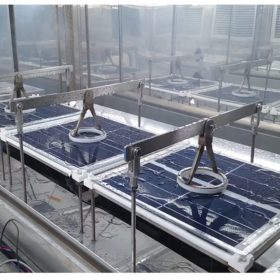
A stress test for all seasons
Scientists led by the U.S. National Renewable Energy Laboratory (NREL) have developed a new stress testing protocol for PV modules, one designed to simultaneously expose modules to multiple stresses, as they likely would be in the field. Putting modules through this test, the researchers have already been able to reveal new information regarding backsheet degradation, and they promise new insights into other degradation mechanisms both known and unknown as well.

Corporate funding for battery storage up 75%
Analysts at Mercom Capital Group have tallied up corporate funding, venture capital and debt and public market investment for battery storage, smart grids and energy efficiency companies. From a financial perspective, the industry appears resilient to the Covid-19 crisis and ready to grow further.

New method to measure solar-powered hydrogen production
Indian researchers have used an “adaptive neuro-fuzzy inference system” to assess the performance of hydrogen production backed by a photovoltaic-thermal collector. They claim it can be applied to other hydrogen production systems.
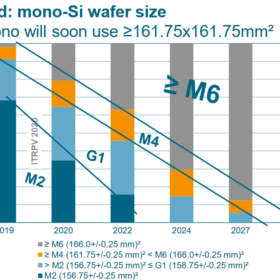
Update of the ITRPV roadmap shows three wafer formats will prevail
In an update to its International Technology Roadmap for Photovoltaics, the German engineering association the VDMA said that solar module sizes of up to 4.0m² may be brought to mass production in the future.
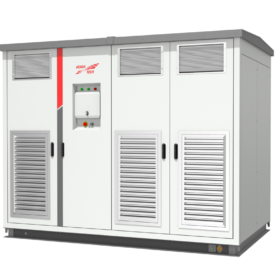
New central inverter from Kehua
The 4.167 MW inverter has a reported efficiency of 99.02% and a European efficiency of 98.7%. The Chinese manufacturer claims the inverter’s DC parallel connection ensures the continuous operation of devices and increases the overall utilization rate by 1%.
Organic redox flow battery with PEDOT electrodes
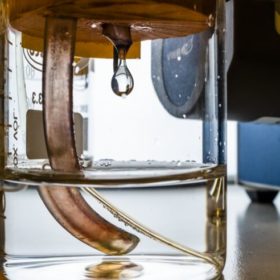
Swedish scientists have developed a redox flow battery with polymer electrodes, based on a special conductive polymer known as PEDOT. The battery features a water-based electrolyte based on a solution of redox quinone molecules, which can be extracted from forest-based materials.
Luxembourg launches 40 MW solar tender
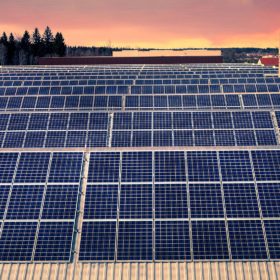
The exercise will be open to PV projects ranging in size from 200 kW to 5 MW.
Tesla’s Musk: ‘Energy business will ultimately be as large as our vehicle business’
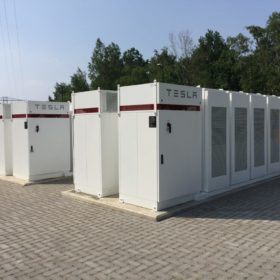
Tesla’s solar and battery businesses show signs of life in another profitable quarter for the EV manufacturer.
