
Kenya launches tender to add solar to 22 diesel mini-grids
Kenyan utility KPLC wants to retrofit 23 diesel mini-grids by adding wind and solar power generators. PV is the only option available for 21 of the selected sites.

Novel catalyst produces green hydrogen from seawater via solar
Australian and Chinese researchers have developed a novel catalyst for the production of green hydrogen from seawater via solar.
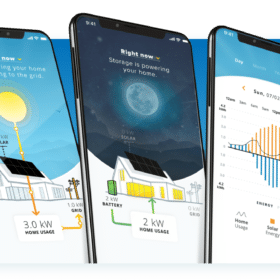
SunPower launches home monitoring app for solar, storage
The SunPower solar monitoring app draws inspiration for its user interface from unlikely non-energy sources such as Spider-Man.
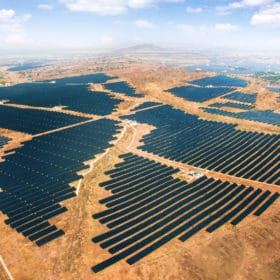
India’s NTPC tenders 735 MW of solar capacity
Bidders have until Feb. 22 to express interest in NTPC’s latest PV tender. The state-owned power producer will offer solar capacity in three blocks of 245 MW at the Nokh Solar Park in the Indian state of Rajasthan.

UK government asks how future renewables incentives should work
The success of unsubsidized clean power facilities in the country – whether driven by corporate power purchase agreements or selling direct to the wholesale electricity market – has prompted the Department for Business, Energy and Industrial Strategy to ponder whether contracts-for-difference payments will be fit for purpose in the years ahead.
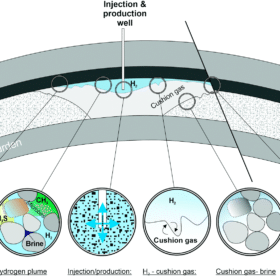
Key challenges for underground hydrogen storage
An international research team has presented challenges and knowledge gaps in the implementation of large scale underground storage of hydrogen. The main issues associated with this technology relate to the fluid flow behavior of hydrogen in subsurface reservoirs, geochemical reactions caused by hydrogen injection, biotic reactions caused by excess hydrogen, and the geomechanical response of the subsurface to hydrogen storage.
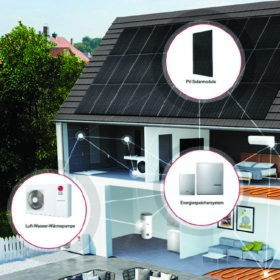
LG Electronics offers hybrid system combining heat pump, PV and storage
The system generates electricity and heat for residential houses and small businesses. An integrated energy management system should guarantee maximum self-consumption of the solar power produced.
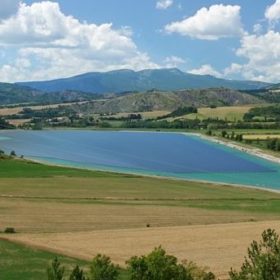
EDF begins work on 20 MW floating PV plant in France
The French energy company will build the facility on the water reservoir of the Lazer hydroelectric plant, to double its production. Construction is expected to require 13 months.
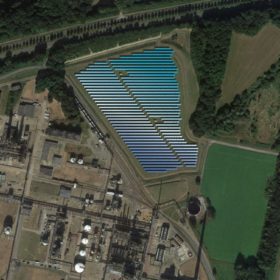
European joint venture wants to deploy 4 GW of PPA-linked solar across UK, Germany and the Netherlands
Ampyr Solar Europe, a new joint venture between Naga Solar, the AGP Group, and Hartree Partners, will develop ground-mounted photovoltaic projects in the three European countries. The solar parks will be financed through power purchase agreements with energy suppliers and businesses.
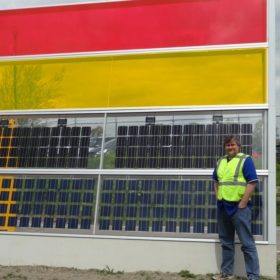
Improving PV panel performance with luminescent solar concentrators
Researchers in the Netherlands say the lack of a universal standard is preventing luminescent solar concentrators from being widely adopted as photonic devices or for improvement of PV module performance. This technology can be integrated with finished solar panels with no need of modifying their electronic structure, helping them collect high-energy photons that they fail to harvest.
