
Engie, Neoen plan 1 GW solar-plus-storage project in France
The two French companies have announced Horizeo, a massive project that includes a solar plant, battery storage, a green hydrogen production unit, a data center, and an agrivoltaic facility. The huge project is scheduled for completion in 2026.
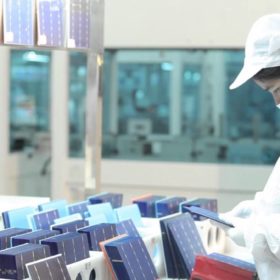
Chinese PV Industry Brief: Jinko begins work on 20 GW cell factory
The solar cell manufacturing facility, located in China’s Yunnan Province, is expected to raise Jinko’s cell capacity to 30 GW by the end of 2021.
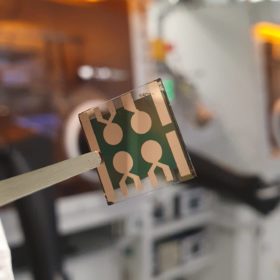
Inverted perovskite solar cell with 21.1% efficiency and high moisture resistance
Australian scientists have built a perovskite solar cell based on 2D and 3D salts. By adding a fluorinated lead salt in the processing solution – normally used to form 3D methylammonium lead iodide – they were able to achieve a 21.1% efficiency, an open-circuit voltage of 1.12 V, a short-circuit current of 22.4 mA/cm2, and a fill factor of 84%.
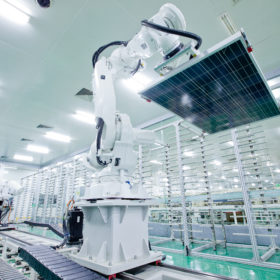
JinkoSolar announces 23.01% efficiency for n-type monocrystalline panel
The PV module relies on Jinko’s TOPCon mono cell technology, for which a record efficiency of 24.9% was announced last week. TÜV Rheinland has confirmed the result.

South Korea may tender 4 GW of solar PV this year
The Korea Energy Agency (KEA) will likely launch two 2 GW tenders in April and October. These will include the procurement of large-scale solar PV parks for the first time.
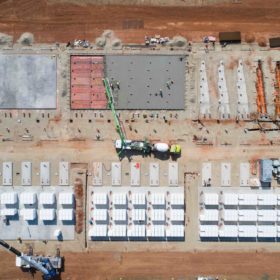
Neoen plans 500 MW / 1000 MWh battery in Australia
Neoen Australia has filed planning documents for a 500 MW / 1000 MWh big battery to be built west of Sydney.
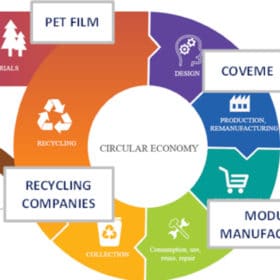
Coveme: Pushing for a greener solar industry with emphasis on material innovation
Separating backsheets from solar PV modules is one of the most challenging issues for module recycling, because of the glues involved. Given the difficulties in pulling apart the layers, which are typically made of virgin plastic, they are usually burned. However, there are some industry players taking steps to improve the design, recyclability and reusability of backsheets. One of them is Italy-based Coveme, which recently partnered with pv magazine’s UP Initiative. In the following interview, CEO Amedeo Maccolini explains what the company is doing to step UP its sustainability game.

Turkey to hold 1 GW solar tender between March 8-12
The tender will be open to PV projects ranging in size from 10 to 20 MW. The Turkish government has set a ceiling price of TRY0.35 ($0.047)/kWh for the procurement exercise. The selected facilities will be located across 74 grid connection points and will have to rely on locally produced modules.
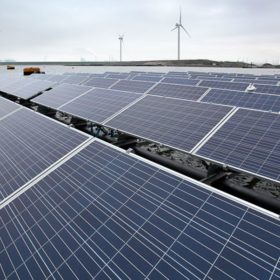
System design key to enhancing cooling effect of water in floating PV
Researchers in the Netherlands and Singapore have measured irradiance-weighted average temperatures of floating PV systems in both countries and have compared the results with reference rooftop and ground-mounted PV systems. They have discovered that floating PV systems with open structures, which allow wind to pass beneath the modules, can provide a higher heat loss coefficient.

Australian iron ore producer, South Korean steelmaker agree to green hydrogen future
Fortescue Metals Group Chairman Andrew ‘Twiggy’ Forrest returned to Western Australia last week after a four-month worldwide search for green energy projects and resources. One of the deals secured on the trip was a circular green hydrogen partnership with South Korean steelmaker Posco.
