The weekend read: Sustainable finance – reassessing risk, purpose
The global Covid-19 crisis has had a tumultuous impact on the global economy. It has brought investment risk and purpose into sharp focus, while also bolstering sustainable finance. But what does it mean for solar? Felicia Jackson reports from London on the evolving investment landscape, with climate and social impacts becoming more prominent in financial decision making.
Another two merchant solar projects secure financing in Australia
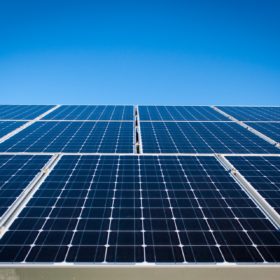
Netherlands-based renewables developer Photon Energy will build two PV plants totaling 14 MW in the Riverina region of southern New South Wales (NSW). The two projects will feature bifacial PV modules mounted on single-axis trackers and will supply the produced electricity to the spot market.
Work begins on two PV facilities totaling 146 MW in the Netherlands
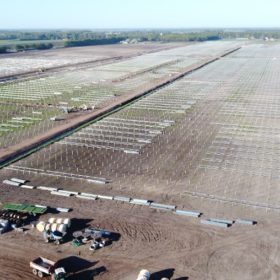
Chint Solar Netherlands and Powerfield began construction of two new solar parks in the Netherlands. The Stadskanaal and Buinerveen Solar Parks follow the companies’ 103 MW Midden-Groningen Solar Park, now in operation.
Japanese golf course becomes 100 MW solar park
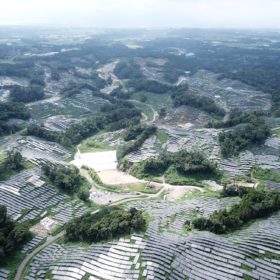
A new 100 MWp solar power plant supplied with Kyocera solar modules has begun operation in Japan’s Kagoshima Prefecture. Operated by the Kyocera-backed Kanoya Osaki Solar Hills LLC joint venture, the plant is one of the largest PV facilities on the island of Kyushu. Venture partner Tokyo Century arranged financing for the project with 17 regional banks.
Chinese PV Industry Brief: 4.3 GW of new cell capacity and a 1 GW solar park
Cell manufacturer Aiko Solar is raising funds to increase its production capacity with 4.3 GW of new lines while Datang Corporation has inked a deal for a 1 GW desert project.

US renewable energy surpasses coal for the first time in more than a century
The coal era could be said to be officially over in the United States.
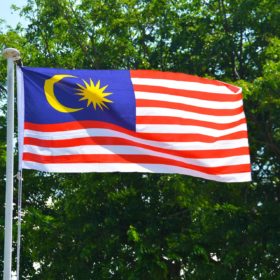
Malaysia launches 1 GW solar tender
Sunday will herald the largest PV procurement exercise ever held in Malaysia. Half the available capacity will be directed to 10-30 MW facilities with the balance reserved for plants with capacities of up to 50 MW.

GCL-Poly abandons $35m fundraising exercise
Today’s announcement indicates either the board or the listing committee of the Hong Kong exchange where the company is listed put a spanner in the works.

Algeria plans 4 GW of solar tenders
The government has announced a plan to deploy new PV capacity at a mega site over the next four years. Around 800 MW of capacity is expected to be tendered annually up to 2024. To be eligible, it is anticipated all modules, cables and mounting structures must have been made in Algeria.
South Korea introduces carbon footprint rules for solar modules
The regulations will come into force on June 15 and will entail panel carbon footprints being calculated according to life cycle assessments of their environmental impacts according to the KS I ISO 14040 Korean standard.
