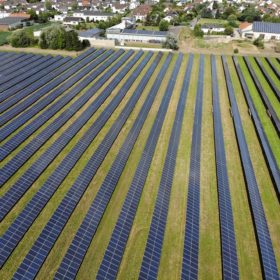
Would solar decarbonize French energy – or just replace nuclear?
A thinktank has studied whether increased solar energy would contribute significantly to reducing the carbon footprint of the French and European electricity systems in an attempt to respond to a common French refrain the nation needs no further decarbonization of energy because it has nuclear power.

Renewables and geopolitics: Who will ‘win’ the energy transition?
The losers in a world which no longer runs on fossil fuels are obvious but the dividend from shrugging off hydrocarbon dependency will be spread around most of the world so it is the nations which are winning the cleantech manufacturing and intellectual property race which appear best positioned for the future.

Solar tender in Mauritius
The island nation’s Agricultural Marketing Board is seeking proposals for a ground-mounted PV plant. Developers have a week to submit bids.

Europe can be 60% powered by solar before 2050
Perhaps it is not surprising a report co-produced by Europe’s solar industry places PV at the heart of a zero-carbon, mid-century energy system on the continent. However, the study does flesh out two out of three scenarios in which becoming carbon-neutral by 2050, or even 2040, could be possible.
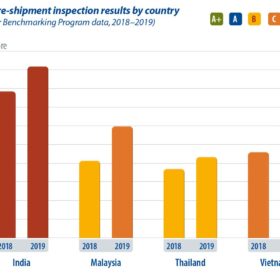
Quality benchmarking in times of tariffs
The PV industry’s rapid factory expansions and quick product rollouts lead to a constant balancing act between the streamlining of production and the introduction of new features to push the boundaries of power generation and achieve lower LCOE. Given these competing factors, CEA has brought together its data based on experience in providing third-party quality assurance oversight to produce its Supplier Benchmarking Program. Joseph Johnson, CEA’s lead analyst for solar and storage, digs into the data.
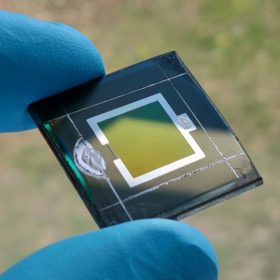
HZB scientists announce 24.16% efficiency for tandem CIGS solar cell
The Fraunhofer Institute for Solar Energy Systems’ (ISE) CalLab has confirmed the new efficiency rating. The researchers have combined semiconductors, perovskites and CIGS to produce a monolithic two-terminal tandem cell.
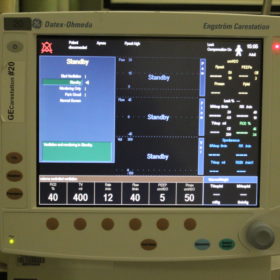
Indian solar cell factory producing ICU ventilators for Covid-19
Central Electronics, India’s first silicon PV manufacturer, is drawing on its technical expertise to ramp up production of ICU ventilators, as part of the country’s response to the Covid-19 pandemic. It has invited global bids from ventilator manufacturers to collaborate with on production.

Ultrathin, flexible solar cell with 13% efficiency
Researchers at Monash University in Australia have managed to develop a solar cell so ultralight and flexible that it could revolutionize the future of wearable tech.
A non-flammable lithium metal battery
Researchers from Deakin University in Australia claim their battery chemistry is based on a new class of electrolyte material which carries no risk of uncontrolled thermal events and represents a viable alternative to rechargeable lithium-ion batteries.
Covid-19 daily bulletin: Renewables squeezing out fossil fuels as energy demand plunges
Although the energy price recovered this week, ultra low levels driven by bumper solar power generation on a sunny weekend in Germany reportedly put further pressure on the business case for conventional energy.
