
New metric shows renewables are 53% cheaper than nuclear power
A new metric for assessing total system costs puts a least-cost mix of offshore wind and solar at about €46 ($54.20)/MWh in a future climate-neutral energy system for Denmark. Researchers tell pv magazine that figure is less than half the equivalent cost of nuclear under the same conditions.
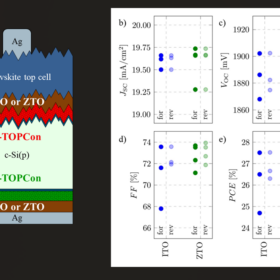
Perovskite–silicon tandem solar cells using zinc-doped tin oxide achieve comparable performance to indium tin oxide counterparts
Fraunhofer ISE-led researchers demonstrated zinc-doped tin oxide (ZTO) as an indium-free alternative to indium tin oxide (ITO) for recombination layers in fully textured perovskite–silicon tandem solar cells. ZTO delivers comparable device efficiencies of 27–28% under current-matching conditions, offering a scalable, indium-free pathway for high-performance tandem photovoltaics without efficiency loss.
Chinese PV Industry Brief: JinkoSolar, Hoshine Silicon posts significant losses for 2025
Hoshine Silicon reported 2025 revenue of CNY 20.499 billion ($2.82 billion) and a CNY 2.991 billion net loss driven by PV disruption and impairments. Meanwhile, polysilicon and wafer prices continued to decline in mid-April amid high inventories and weak demand.

Switzerland to fund research on PV module, battery, heat pump recycling
The Swiss federal government has launched a funding call for research projects on energy and resource-efficient industrial processes, including the circular economy related to solar modules, batteries, heat pumps and electrolyzers. The deadline to submit pre-proposals is June 30.

Cyclones and unseasonal polar winds shape Australia’s solar resource in March
In a new weekly update for pv magazine, Solcast, a DNV company, reports that March in Australia was unusually wet and disrupted, with frequent tropical cyclones, polar air intrusions, and repeated low-pressure systems causing widespread cloud, storms, and record cold in the southeast. Solar irradiance was mixed: below average in the south due to persistent cloud and storms, but near or above average on some northern and coastal regions where breaks between systems allowed recovery.
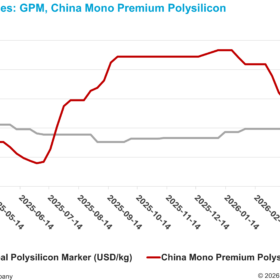
China polysilicon hits cost floor as producers curb output amid weak demand
In a new weekly update for pv magazine, OPIS, a Dow Jones company, provides a quick look at the main price trends in the global PV industry.
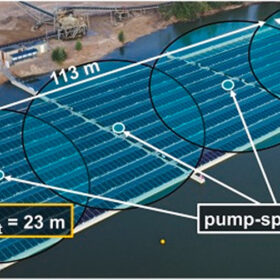
Spray cooling for floating PV
A research team in Germany developed a dynamic model of spray cooling for floating PV systems that couples thermal behavior, electrical performance, and active cooling, and validated it against a 750 kW installation. Simulations across four climates showed that spray cooling reduces module temperatures by up to 42% and improves energy yield by up to 3.8%, with benefits strongly dependent on local conditions.

Thermostatic radiator valves can reduce energy consumption in air-source heat pumps by 6-8%
Researchers in the United Kingdom found that thermostatic radiator valves can reduce air-source heat pump space heating energy use by 6–8% without affecting system efficiency when used correctly. TRVs must be applied carefully in well-designed, balanced systems with at least one open flow path, as they mainly serve as a secondary tool for room-level comfort control rather than a replacement for proper heat pump design and low flow temperature operation.

Pur Energy launches all-in-one battery–based home backup power solution
India-based Pur Energy has launched the PuREPower 3.0 Lite, an all-in-one lithium battery-based power backup solution positioned as a cleaner and more compact alternative to conventional inverter and lead-acid battery combinations for the residential segment.
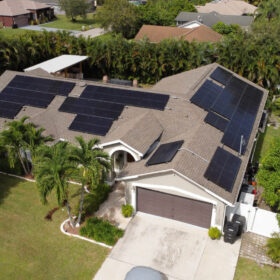
U.S. startup aims to make signing up for solar as easy as signing up for cell phone service
Florida-based Terra Energy offers solar subscriptions to homeowners on an initial 36-month agreement and seeks to retain those customers for the long-term by proving it can offer something better than the alternative.
