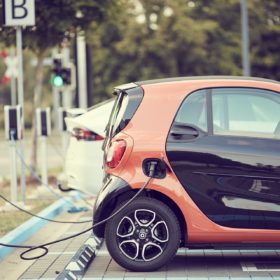
Total to deploy 20,000 EV charging stations in the Netherlands
The public charging points will be installed in the provinces of North Holland, Flevoland and Utrecht. The oil giant said they would all be powered by renewable energy.

‘China will add 35-38 GW of solar this year’
Power generation statistics released by the National Energy Administration appear to confirm the nation added 12 GW of solar last month. China also deployed another 41 GW of polluting coal-fired power plants last year.
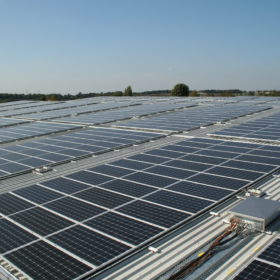
A new strategy to mitigate voltage spikes in small solar systems
The approach combines virtual impedance and a modified pulse-width modulation strategy to suppress fault currents in grid-connected PV systems.
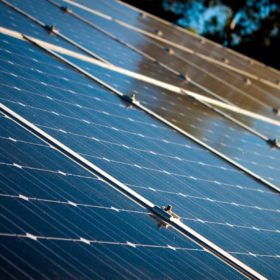
The best way to predict the I-V profile of PV panels
A study has considered the best mathematical models for predicting solar module performance under varying conditions.

Albania launches 140 MW solar tender
The country’s second large scale solar plant will be built in the Karavasta area, in the centre of the country. Half the energy produced will earn a tariff payment of no more than €55/MWh, the rest will be sold on the energy market.

Armenia aims to improve net metering for small scale solar
The government is being helped by the European Bank for Reconstruction and Development as it designs a new net metering system. The country already supports large scale PV plants and small solar parks.

Where there’s smoke… there’s reduced PV output
A minor concern it may be, compared to the tragic loss of life, livelihoods and biodiversity caused by the bushfires still ravaging parts of Australia, but reduced output by PV systems due to smoke haze is an unwelcome bi-product of blazes that have burned at a scale and ferocity never seen before.
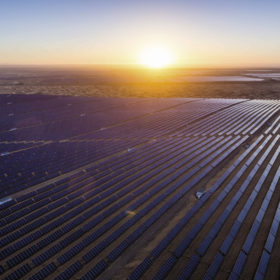
China Huaneng to acquire 294 MW of GCL New Energy projects
The state-owned electric utility is preparing to acquire seven project companies in China, generating $156 million for the developer and removing a further $385 million of liabilities from its books.

Lead-free soldering in modules: It can be done!
pv magazine’s UP sustainability campaign has investigated the use of lead in PV panels and found, with soldered cell interconnections in particular, viable alternatives are scarce. However, German headquartered manufacturer Opes Solutions has launched a small module for the off-grid market featuring lead-free solder, developed at the request of a customer. We caught up with Opes CEO Robert Händel for a closer look at the module and the challenges and benefits of going lead-free.

Panasonic claims 16.09% efficiency for lightweight perovskite solar module
The device has an area of 802cm² and thickness of 2mm. The manufacturer claims it improved module performance through an inkjet coating method and a reduction in weight by using thin glass substrates.
