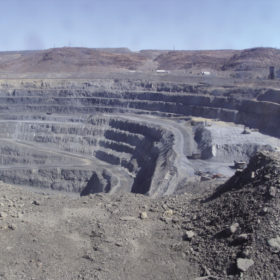
The weekend read: Taking the lead
This quarter, pv magazine‘s UP Initiative focuses on lead – a toxic heavy metal that’s present in many PV technologies, and one that’s often mentioned in connection with hazardous substances across the green energy supply chain. We take a closer look at the issue and ask what it would mean for manufacturers to replace lead in their modules with more environmentally friendly materials.
Scottish Power enters PV business
The distribution network operator for central and southern Scotland says it wants to maximize onshore renewables potential by adding solar and storage to its clean energy business. The company said hybrid projects combining wind, solar and storage will become the industry standard in 2021.
EU data protection rules could kill VPPs and other new business models
Ursula von der Leyen’s newly-appointed EU Commission is facing an early test of its credentials with the European Council caught in the crossfire over citizen data rights. The renewables industry voiced fears yesterday, at a digitalization conference in Berlin, that overstrict data protection rules could kill data-driven business models while the media is set to portray any perceived weakening of the legislation as evidence of EU lawmakers being in thrall to the Silicon Valley internet giants.
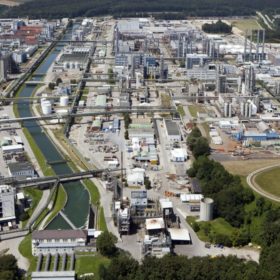
Poly-maker Wacker blames Chinese state subsidies for its latest €750m hit
The Munich-based group has reported a big impairment on its polysilicon production assets. The company cited the lack of a recovery in the PV project market, persistently low polysilicon prices and overcapacity in manufacturing, blaming state subsidies to Chinese rivals.
French researchers developing algorithm to identify losses in PV projects
Liten, a research institute of the French Alternative Energies and Atomic Energy Commission, is developing a method of assessing losses at every stage from the reception of solar rays to the injection of electricity into the grid, to ‘make it possible to optimize the maintenance of the power plants to guarantee their performance’.
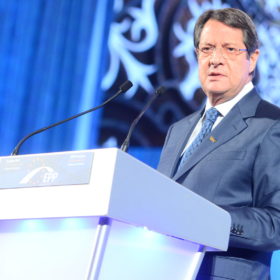
Cyprus installs largest rooftop PV under net billing program
The 2.5 MW array will operate under a payment system which guarantees grid operators will not be left out of pocket.
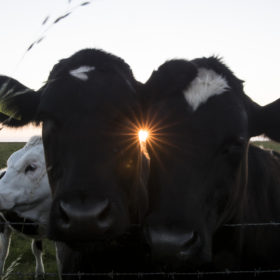
Ambitious 1 GW agrivoltaic livestock farming project announced in Malaysia
The Malaysia Automotive, Robotics and IoT Institute is planning a huge solar power project which will integrate agriculture and livestock farming in the Sabah region. The research institute claims to have already secured $50 million for the project’s first, 200 MW phase. The 25,000ha required for the projects will host up to 150,000 cattle as well as cultivation of forage crops such as kenaf, corn, wheat and hay.

Danish renewables auction too successful at driving down public cost of clean energy
The Danish Energy Agency allocated 252 MW of clean energy generation capacity, of which 83 MW was solar and 93 MW solar-wind hybrid facilities which included 34.1 MW of PV capacity. The average price premium to be paid on top of wholesale electricity rates to the successful bidders has fallen 30% in a year, prompting the authorities to muse they may be allocating too much public money to support such projects.

Elon Musk calls for an ‘immediate’ and ‘significant increase’ in Tesla’s solar installs
Tesla was once the unquestioned leader in the U.S. residential rooftop market with a market share of around 33 percent, but today, the company is No. 3, and its market share during the first quarter was a little more than 6 percent.
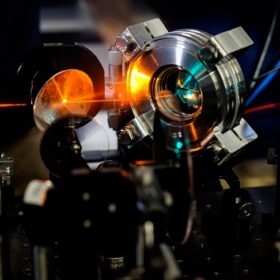
Hot charge extraction to push perovskite efficiency
With the absorption of ‘hot’ charges, which lose their energy faster than it can be absorbed by any convention technology, solar cells could become massively more efficient. An international group of scientists has developed a method to examine the bond between a perovskite and charge extraction layer, and determine the most suitable materials for hot charge extraction in a solar cell.
